Write, structure, and revise lyrics without separating words from the song.
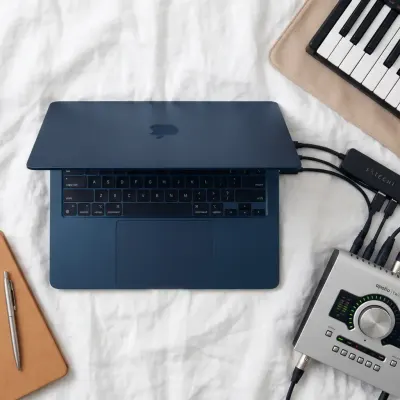
Write song lyrics in 5 minutes, then go further: the parts of a song, a complete example lyric with its parts marked, nine steps, FAQs and a free worksheet.
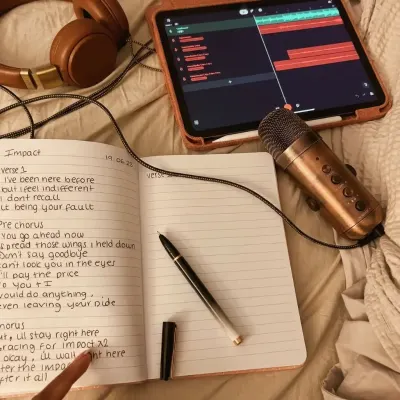
Compare 5 songwriting apps for lyrics on iPhone, Android and web: free plans, prices, recording and rhyme tools, plus what AI full-song apps change.
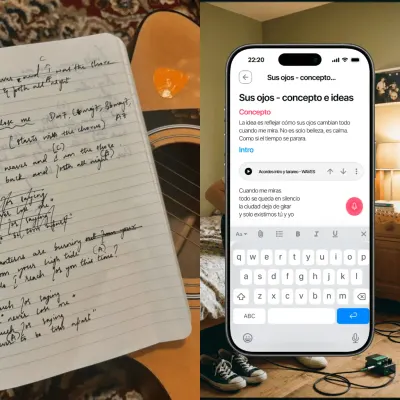
Paper can free your thinking; digital tools make lyrics easier to find and share. Keep both without losing the active draft.
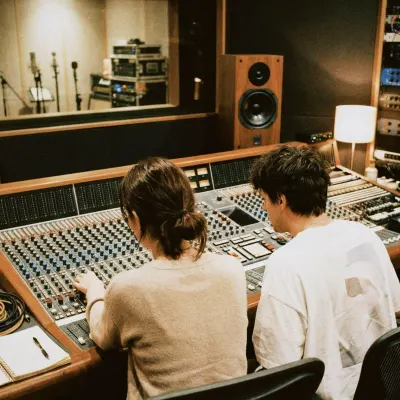
Write your first song in one sitting: 8 steps from idea to rough demo, a worked example, audio you can play and free tools for melody, chords and lyrics.

A practical method for closing an existing draft: identify what is missing, cut what is not helping, and decide when a phase is done.
Hear verse, pre-chorus, chorus and bridge change in one audio example, compare 6 common song forms with bar counts, and map your own song in a free planner.
Hear a verse lift into a chorus, then write your own with 8 techniques, a worked example, an 8-question test and a free chord loop to record over.

Hear a bridge in action, learn when a song needs one and how it differs from a pre-chorus, then write yours with 7 techniques and a free chord loop.
A pre-chorus builds tension between verse and chorus and returns before every chorus. Hear one, compare it with a bridge and write yours over a free loop.
A practical 1:1 or small-group co-writing workflow: roles, timebox, seed, capture, decisions, and a clean close without turning the session into administration.
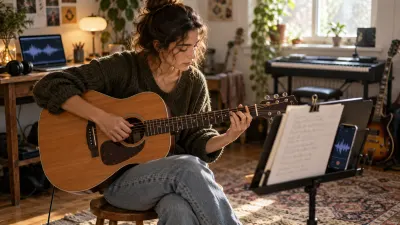
Suno and Udio sing your lyrics with AI; Hookpad, MuseScore, GarageBand, BandLab and Zoundroom help you write the tune. Free plans, prices and rights.
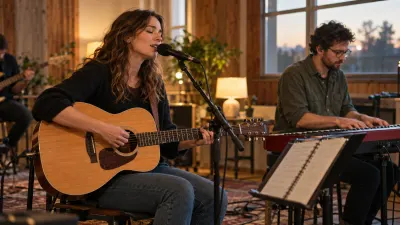
Write a Christian worship song step by step: who sings it, a key the room can reach, simple chords, scripture without copying, a rehearsal test and CCLI.

Write a personal song for someone you love: turn memories into a lyric, a sing-along chorus with their name, simple chords and a phone recording they'll keep.
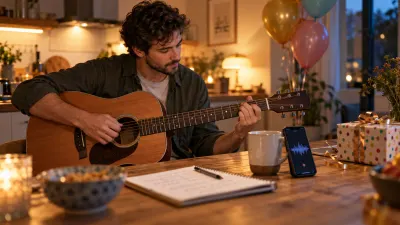
Write a birthday song in one evening: fit their name into the melody, choose funny or heartfelt, copy the template and record it on your phone for a video.

Can't play an instrument or read music? Write a song from a lyric or a hum, find the chords with free tools and finish a first demo with this 7-day plan.

Write a wedding song for your partner or the bride and groom: their story, a 2–3 minute structure, easy chords, an 8-week timeline and a template to copy.

Write a song kids can sing: simple words, repetition, actions and a short range. With a worked example, a school project template and easy recording tips.

Write a song for your mom: turn memories into a lyric, build a chorus on her own words and record it as a gift. With Mother's Day dates and a version for Dad.

Write a trap song step by step: a 140 BPM half-time beat, 808s and hi-hats in plain words, triplet flow, a hook with ad-libs, an original example and a template.
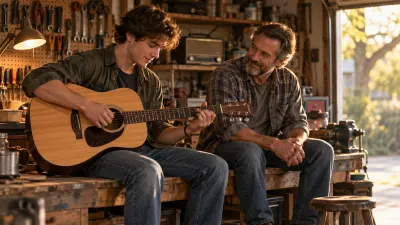
Write a song for your dad: his phrases, a funny or emotional tone, three chords and a template, plus Father's Day dates and how to record it as a gift.

Write a tribute song for a loved one who died: small memories and their own words, a chorus for what remains, gentle chords and a template to copy.

Write a song for Grandma or Grandpa from a family story: interview questions, a melody kids and grandparents can sing together, a template and the dates.

Write a song for your best friend from your shared stories and inside jokes: a chorus, three chords, a template, and versions for her birthday or wedding.

Write a song for your girlfriend, boyfriend or partner: real details, a chorus that sounds like a promise, anniversary and long-distance versions, and a template.

Write a farewell or retirement song for a coworker: collect stories, keep the jokes kind, pick a known tune or your own. Original lyrics and a template.

Write a jingle step by step: 5-, 15-, 30- and 60-second versions, a name hook people remember, a simple melody, a phone demo, and the rules for AI and existing songs.
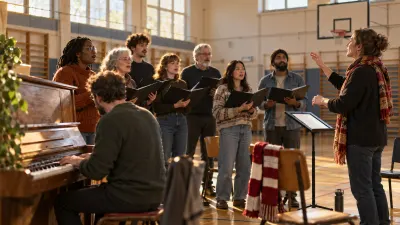
Write an anthem a crowd can sing: a chorus with the name, a narrow range, a steady beat and call-and-response. With a template, a full example and rights tips.
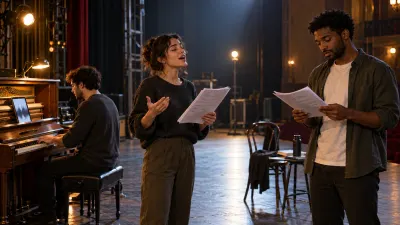
Write songs for a musical: what each song does, the main song types, a scene-to-song method with an original example, a template and a plan for a school show.

Write a parody song step by step: map the original's syllables and stresses, rhyme in the same places, keep the hook and check the rules before you post it.

Write a lullaby for your baby: a slow rocking 3/4 or 6/8 feel, a small range, soft repeated words and their name. With an original example and a template.

Write your own Christmas song or carol: a singable chorus, bells, a kids' range, a template, a school-show timeline and old carol tunes you can reuse.

Write a thank-you or goodbye song for a teacher with the whole class: real classroom details, a chorus kids can sing, an easy tune, a template and recording tips.

Write a song for your daughter or son from details only you know: a letter-to-song method, an original example, a template and versions from baby to wedding.

Write a song for your sister or brother from shared childhood memories: rivalry jokes, a chorus, three chords, a template, and versions for birthdays or weddings.

Write a song for your dog in an afternoon: put its name in the chorus, turn its habits into jokes, copy the template and film it. Plus a gentle version in memory.

22 songwriting techniques, from object writing and prosody to borrowed chords and co-writing rules, each with an original example and a 5-minute test.
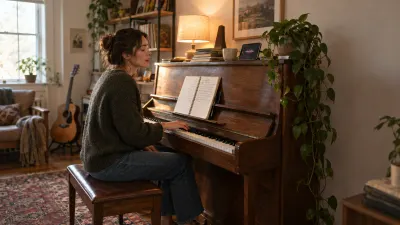
Write a melody step by step: rhythm, contour, chord tones, repetition and contrast. Hear each principle, then write 8 bars over a free chord loop.
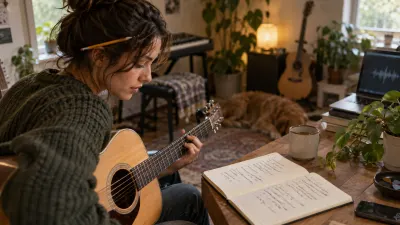
Have lyrics but no tune? Turn the words' rhythm into notes, shape a melody, add chords and hear every stage on a real four-line lyric. AI options too.
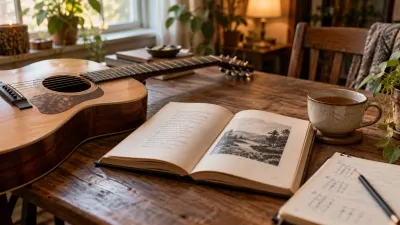
Turn a poem into a song: mark the stresses, choose a chorus, trim free verse, find the melody in your speaking voice, plus a classroom version and the rights.

The most common chord progressions with Roman numerals and chords in C: hear each one, learn its feel and where it fits, and loop it in any key.

Six sad chord progressions with audio and chord names. Hear one melody in major and minor, learn what creates the sadness and how to avoid melodrama.

What a hook is in music, how it differs from a chorus, and how to write one: hear three kinds of hook and pick your best title with a memory test.

No formula guarantees a viral song. What gives one a real chance on TikTok, Reels and Shorts: a hook in seconds, a reusable moment, a loop and snippet tests.

A verse gives scene, detail and tension so the chorus lands. Hear verse vs chorus, follow a worked verse 1 and verse 2, and fix second verse syndrome.

How many syllables should a song line have? Put stresses on strong beats, fix lines that don't fit and test yours on a practice melody and a free counter.

Perfect, slant, internal and multisyllabic rhyme with original lyric examples, plus AABB, ABAB, ABCB and AAAX schemes and an exercise you sing.

Count bars, feel the snare and write the rhythm before the words. Hear boom bap, trap and dembow loops, fix a 4-bar draft and write 8 bars over a beat.
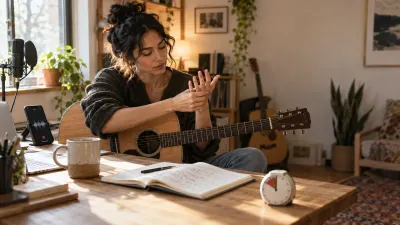
14 timed songwriting exercises for beginners, from object writing to a rough demo. Each has steps, a result, a check and a free tool, plus a 4-week plan.

Write your first song in 10 short lessons: idea, lyrics, melody, chords, structure, chorus, rhyme and a demo. Each has an exercise and a free tool.
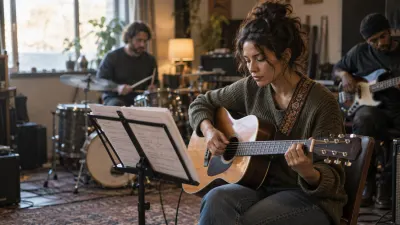
Free lyric sheet and chord sheet templates with the format rules: chords above the syllable, key, capo, repeats, ChordPro, transposing and printing.

Write a love song for your crush, partner or husband: one real moment, details instead of clichés, the right angle and a chorus on a title only you two share.

Write a sad song that hurts without melodrama: show what is missing in the lyrics, then add minor chords, a slow tempo and a falling melody. With audio.
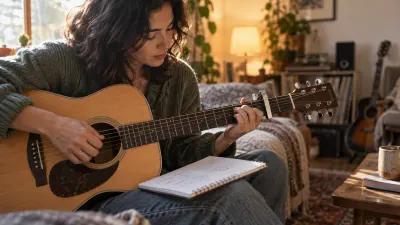
Write your first song on guitar: four open chords, a strumming pattern for the mood, a hummed melody, then words. Capo tips and a full worked example.

Write your own song on ukulele: tune to G C E A, loop C, Am, F and G, turn a strum into a rhythm, keep the tune in range, then pick a key and a capo.

Write your first song on piano: left hand on the bass, right hand on easy white-key chords, a loop to hum over, then lyrics. Shapes, patterns and audio.

Pick a topic and a beat, write the hook first, then 16-bar verses with multis, internal rhymes and punchlines. With audio, a worked example and a daily drill.

How to freestyle rap step by step: find the pocket on a beat, build a rhyme bank with multis, use fillers, tell a story and record drills to keep your best lines.

What a punchline is, six types with original rap examples (double meaning, metaphor, flip), where it lands in the bar, delivery, battle vs. song and drills.

Most songs run 2:30–3:30. Intro, verse, chorus and bridge lengths in bars and seconds, the BPM formula, and lengths for radio, streaming and weddings.

BPM means beats per minute: 60 BPM is one beat per second. Find a song's BPM by tapping, see tempos by genre and Italian terms, and choose yours.
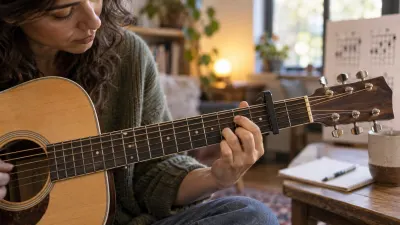
A full capo chart: the chord each open shape sounds like on frets 1–7, the capo and shapes for all 12 keys, and a worked example in B♭ with G shapes.
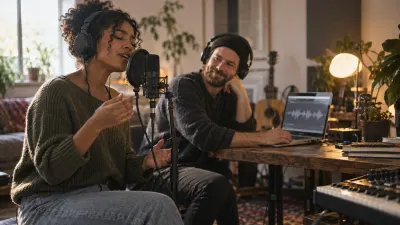
A topline is the vocal melody and lyrics written over a producer's track. Hear one over a loop, see how a topline session runs and write your own.
Songwriting terms in plain English: verse, pre-chorus, hook, topline, prosody, BPM, capo, split sheet and more, each with an example and a link.
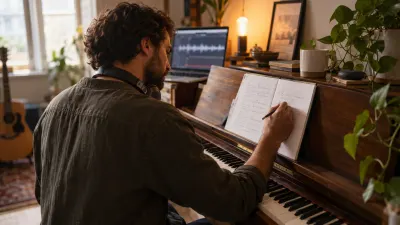
Find a song's key from its chords, by ear with the home-note test or with a free key finder for audio files, and avoid the relative major/minor trap.
What a musical mode is, the 7 modes in order with their color note, and how to write a Dorian or Mixolydian riff you can hear in a free chord player.

All 12 music intervals in one chart with half steps and feel, a well-known song for each so you can hear them, and how to use steps and leaps in a melody.

Every chord type a songwriter needs: major, minor, diminished, augmented, 7, maj7, m7, sus2, sus4, add9 and slash chords, with formulas, sound and when to use each.
Read a key signature on the staff: the order of sharps and flats, two rules to name the key, all 15 signatures in a chart and how to tell major from minor.

What a cadence is, how perfect, plagal, half and deceptive cadences sound in C and G, which endings modern pop prefers and how to end a song or leave a verse open.
Read any chord chart: what m, 7, maj7, sus, dim and slash chords mean, where each chord falls on the lyric, how bars and repeats work, and how to play it.
What a music scale is, the five songwriters use most (major, minor, both pentatonics, blues) with step formulas, and how to turn one into a verse and a chorus.
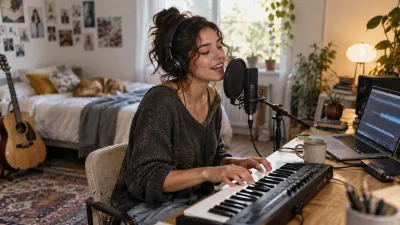
Write a pop song step by step: title-first hook, verse, pre-chorus and chorus, I–V–vi–IV on piano or guitar, prosody, a topline over a loop and a first demo.
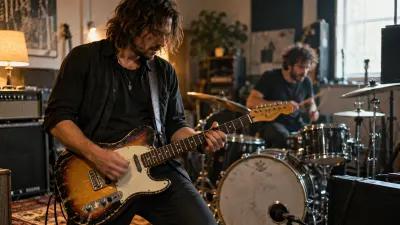
Write a rock song step by step: start from a riff or a line, use power chords, choose a form and tempo, write lyrics with attitude and test the song with your band.
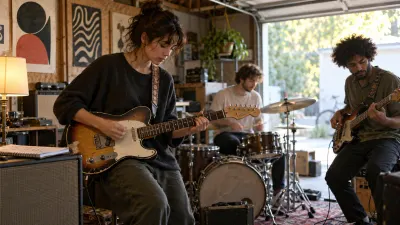
Write a punk song: fast tempo, power chords and three-chord loops, a shout-along chorus, lyrics with a point of view, pop punk tips and a phone demo.
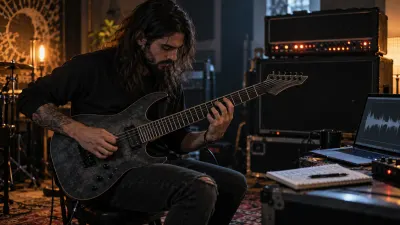
How to write a metal song on guitar: a palm-muted riff in drop D, a song form with a breakdown, lyrics built on real images and how to scream without hurting your voice.

Write an indie song step by step: a personal, specific lyric, maj7 and add9 chords, a free structure, a lo-fi home demo, indie rock vs indie pop, and how to release it.
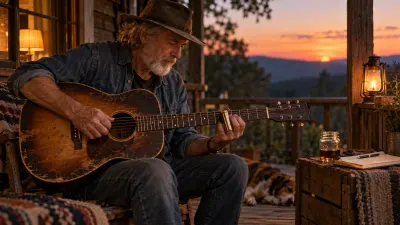
How to write a blues song for beginners: the 12-bar form in A7, D7 and E7, the AAB lyric structure, call and response, blue notes, the shuffle and an original example.

Write a country song step by step: a story told in concrete details, a chorus that turns at the end, I–IV–V on guitar, the right tempo and a first demo.

Write a reggaeton song step by step: the dembow beat at 88–100 BPM, four minor chords, flow and rhyme, a chorus people sing back, an original example and a demo.
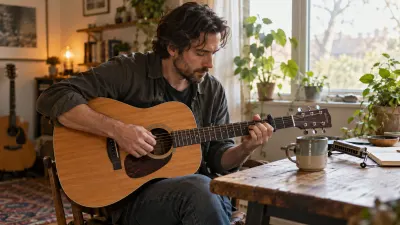
Write a folk song step by step: a story told in verses, a melody anyone can sing back, fingerpicking patterns, open tunings like DADGAD and a first demo.

Write an R&B song step by step: seventh-chord loops like ii7–V7–Imaj7, a laid-back groove, measured runs, intimate lyrics and vocal layers, with audio examples.

Write a ballad step by step: one concrete moment, 60–80 BPM on piano or guitar, a melody that breathes, the bridge, the power ballad build and a careful key change.

Put the rhyme on the stressed syllable, end the line on a word with rhymes, build a rhyme chain with a free dictionary and write the payoff line first.

Metaphor, simile and concrete imagery in lyrics, with original examples: find a metaphor, extend it through a song without mixing it and skip the clichés.

Writing songs in Spanish, French or any language that isn't yours? Put stress on the beat, hold open vowels, trade calques for idioms and test with native ears.
Compare tools by the real job: writing, recording, producing, collaborating, or publishing.
The app kit a working musician needs in 2026, moment by moment: capture, songwriting, tuner and metronome, demos, live setlists, backing tracks, band, release.
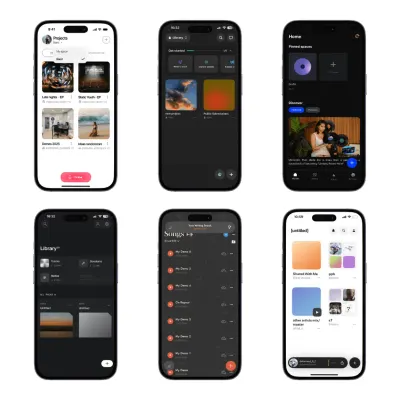
GarageBand, BandLab, Demo, Suno, Udio and Zoundroom compared by AI use, free plan, price and platform, with the best pick with no AI, on iPhone and on Android.
Compare 8 iPhone apps for songwriting and recording, from free Voice Memos and GarageBand to Zoundroom and Demo: prices, free plans and iPhone setup.
Which social music app fits your goal? BandLab, SoundCloud, TikTok, Reels, Shorts, Spotify for Artists and Bandcamp compared for feedback, collabs and fans.

How music distribution works in 4 steps, plus DistroKid, TuneCore, CD Baby, Amuse, UnitedMasters, Ditto and RouteNote compared on price, cut and 3-year cost.
Compare Android apps by the job you actually need: capture an idea, preserve context, write lyrics, work with chords, or turn the draft into production.
Hookpad, Suggester, ChordBot, Scaler, Piano Companion, Demo and Chord ai compared by platform, free plan, price and exports, plus a free chord player.
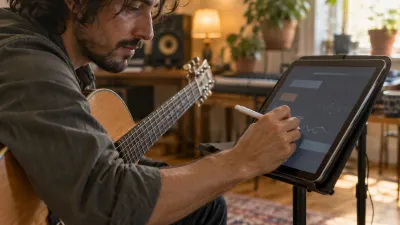
The best iPad apps for songwriting by job: lyrics with Apple Pencil, demos in GarageBand or Logic Pro, notation, beats and practice, with prices checked.
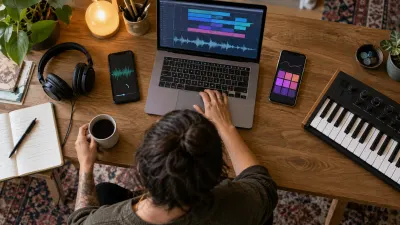
The best BandLab alternatives by reason: a free DAW for PC or Mac, studios for iPhone, Android and the browser, beat making and private song organization.
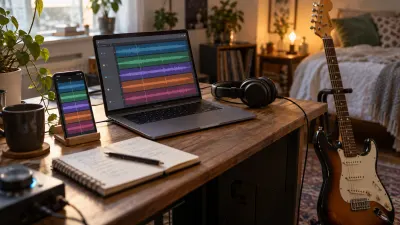
There's no official GarageBand for Android or Windows. The closest free alternatives by need, with prices checked on official pages, and how to move a song across.

The best singing apps by job: lessons, pitch checks, warm-ups, range and key, recording takes, lyrics and karaoke, with free plans and prices checked.
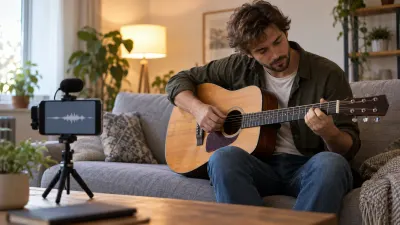
The best free apps to record music on iPhone and Android by need: quick ideas, multitrack demos, beats, rehearsals and external mics, with each free plan's limits.

BandLab, GarageBand, FL Studio Mobile, Koala, Ableton Note, Groovepad, Soundtrap and Audiotool compared: prices, platforms, stems and who each beat app suits.

MuseScore Studio, Flat, Noteflight, Dorico, Sibelius, StaffPad, Notion and Guitar Pro compared: free plans, prices, platforms, handwriting, tab and export.
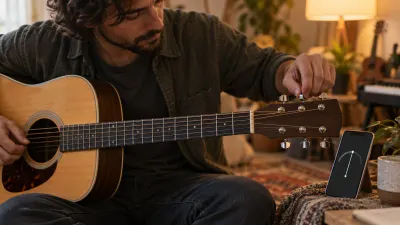
GuitarTuna, Fender Tune, Pano Tuner, gStrings, Soundcorset, iStroboSoft, Tunable and our free online tuner compared: modes, tunings, cents and prices.
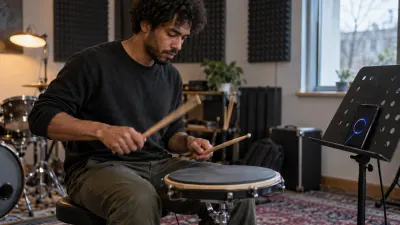
Soundbrenner, Pro Metronome, Tempo, Metronome Beats, Tunable, Soundcorset and our free tap tempo metronome compared: meters, subdivisions, setlists, prices.

GarageBand, BandLab, Cakewalk, Waveform Free, LMMS, Pro Tools Intro, Audiotool and Soundtrap compared, plus the real deal with REAPER and FL Studio.

Jam, Blend, SharePlay, Deezer Shaker, SoundCloud comments and live shows: which streaming apps let you listen with friends, share playlists and hide activity.

Bandcamp, Patreon, Discord, email, WhatsApp and Instagram channels, YouTube, Laylo and crowdfunding compared by job, with fees checked in September 2026.
Turn scattered files, notes, and versions into projects you can recover and finish.
Voice memos, versions and lyrics everywhere? Set up a system in one afternoon: 5 rules, a folder map for 3 songs, file names, archiving and a weekly review.
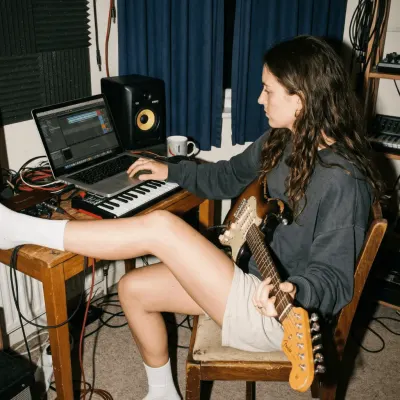
Compare software to organize your own songs, versions, stems, lyrics and catalog, plus free taggers for an MP3 library. Prices checked in September 2026.
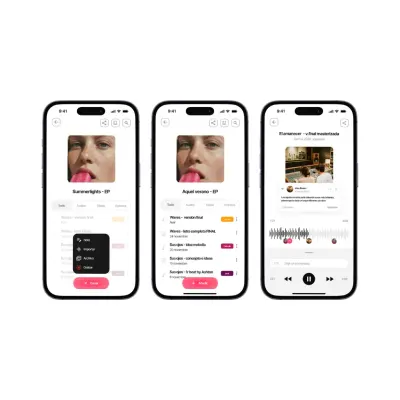
Turn recordings, lyrics, versions, and decisions into one resumable project per song. Use this practical method without rebuilding your whole archive first.

A focused first session back: reconstruct context, separate decisions from placeholders, and choose one action that moves the song again.
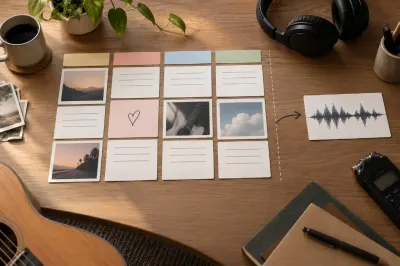
How to use Notion as a notes and planning layer for songs, where audio, version, and song-state limits appear, and when another tool fits better.

Your song is protected once it's recorded or written down. See when to register it with the US Copyright Office and how to join BMI, ASCAP and the MLC.

Performance, mechanical, sync and print royalties explained: who collects each in the US, UK and Canada, the writer and publisher share, and how to start.

An EP has 4 to 6 songs and runs 30 minutes or less. See the official single, EP and album rules, vinyl time per side, and how to plan and order your release.
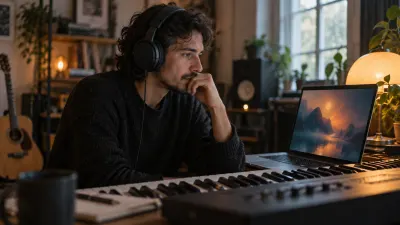
What sync licensing is, the two licenses every placement needs, how supervisors and libraries find songs, and how to prepare stems, metadata and splits.

What a music publisher does, how full, co-publishing and admin deals split your income, and the clauses to check before you sign. Based on ASCAP, BMI and MLC rules.
Generate, capture, and develop ideas without losing the context that makes them useful.

Move a melody, lyric, rhythm, or chord fragment through selection, development, structure, demo, and revision without losing its original spark.
A low-friction capture system for melodies, lyrics, rhythms, and production ideas—plus a review habit that turns fragments into usable songs.

Lower or raise a recording without changing its speed, or transpose the chords to fit your voice. Find your key, pick the right tool and know how far to go.
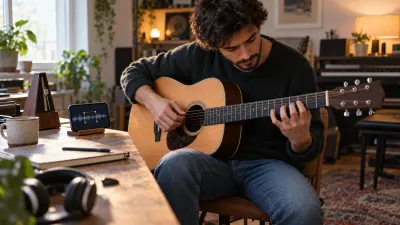
Slow a song to 70% to learn a solo, practice singing or play along, with the pitch intact: Zoundroom's editor, YouTube, Audacity, GarageBand and a practice plan.
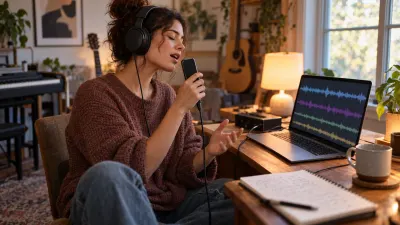
Sing over a backing track, a beat or your own guitar take on your phone: wired headphones, latency, Zoundroom's editor, GarageBand, BandLab and covers.
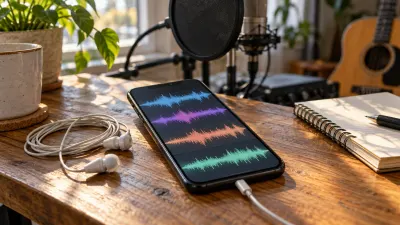
GarageBand, BandLab, n-Track, Cubasis, FL Studio Mobile, Audio Evolution and Zoundroom compared: track limits, free plans, prices, platforms and export formats.

Moises, Transpose, Anytune, Amazing Slow Downer, Capo, Transcribe!, Music Speed Changer and Zoundroom compared: pitch, speed, stems, free plans and prices.

Voice Memos, Google Recorder, Samsung, Easy Voice Recorder, Dolby On, GarageBand, BandLab, Voloco and Zoundroom for recording your singing: formats, prices, limits.
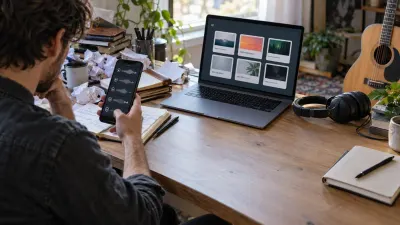
A practical method to clean up a recording archive, preserve context, and turn useful voice memos into song material.

Compare apps for capturing melodies and lyrics, preserving context, finding ideas later, and continuing the work across devices.
Musical ideas do not come from one mental switch. Use memory, expectation, constraints, movement, variation, and incubation to create conditions for them.
Diagnose whether you cannot start, choose, continue, hear clearly, or find your work—and use an exercise matched to the pattern.
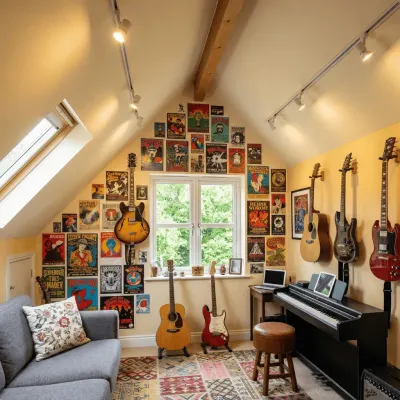
Create a music-making environment that lowers friction, preserves ideas, and makes unfinished songs easy to resume.

Five documented song origin stories—from Satisfaction to Hallelujah—and practical lessons about capturing, revising, sharing, and protecting unfinished music.

Not sure what to write a song about? Pick a small moment that changed something. 60 specific ideas by theme and genre, three tests and a 10-minute method.

110 original song title ideas by theme, six ways to make your own, and a three-part test: sing it, picture it, search it. With a worked example.
Decide what a demo must communicate and make only the level of finish you need.
Hear one melody as a quick capture and as a demo with chords. Learn what a demo means in music, how it differs from a master and what to send.
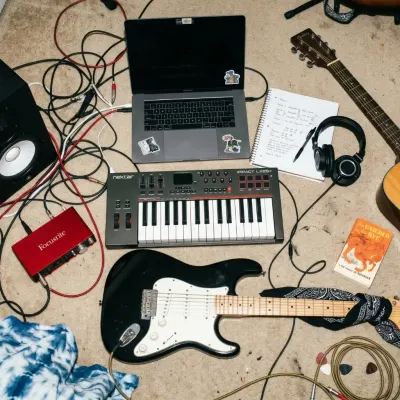
Record a clear home demo with the equipment you already have. Choose the demo's purpose, control the room, capture a reference, and organise the next version.
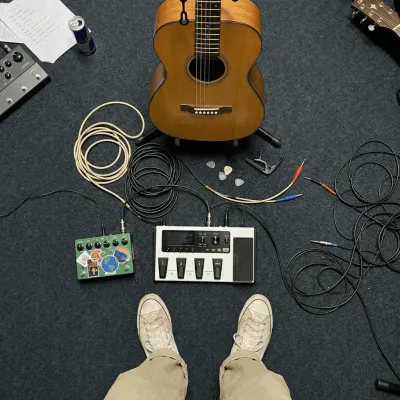
Record a song on your iPhone or Android phone for free: where to put the phone, Voice Memos and GarageBand settings, singing over a backing track and what to export.
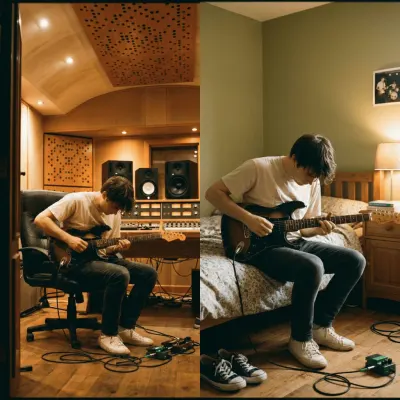
Build a low-friction songwriting space with tools you own. Separate writing needs from production purchases and upgrade only for real limits.
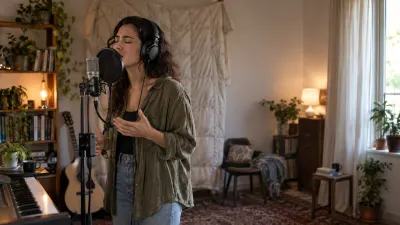
Record vocals at home with a phone, USB mic or interface: room fixes that work, mic distance, gain at −12 dBFS, comping and light processing for beginners.
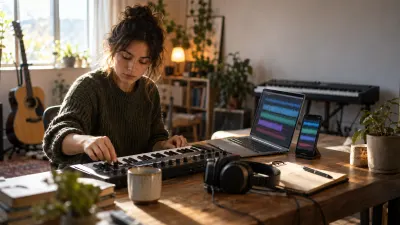
Make a song demo in GarageBand on iPhone or Mac: tempo, count-in, chord strips, vocals, drums and export, with a worked verse–chorus example at 96 BPM.

Find each label's demo policy, pick 1–3 songs, send a private link and a short email, then follow up once. With real submission rules and templates.
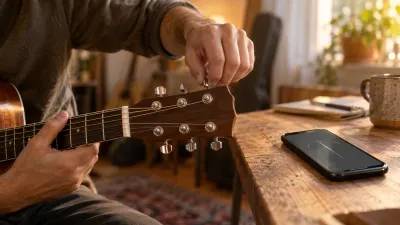
Standard tuning is E A D G B E. Tune with your phone's mic, by ear with the 5th-fret method or harmonics, and switch to Drop D, DADGAD or open G.
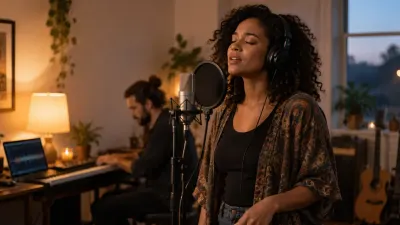
The six voice types with their ranges in note names, how range differs from tessitura, and how to measure your own voice safely and choose a key to sing in.

What breath support really is, six breathing exercises for singers with a 5-minute routine, how to hold notes longer, and how to write breaths into your own songs.
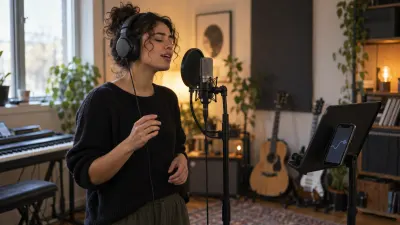
Why you sing out of tune, how to check your pitch with a free note finder and tuner, a 10-minute routine of six exercises, and how to pick a key that fits.

Make your strumming automatic with a metronome, speak the lyric over it, then sing. Step-by-step exercises, a 7-day plan and three practice songs in open chords.
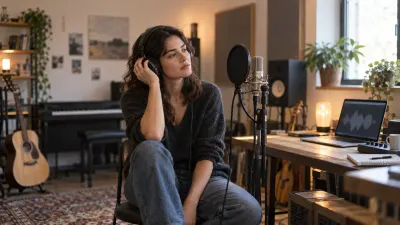
Find your singing voice in two parts: measure your voice type with a free range test, then imitate, record one line three ways and keep what sounds like you.
Organize ideas, feedback, and responsibilities so the band can finish songs.
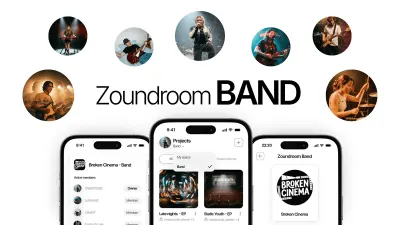
A practical band collaboration system for ownership, versions, focused feedback, decisions, and handoffs from writing to production.
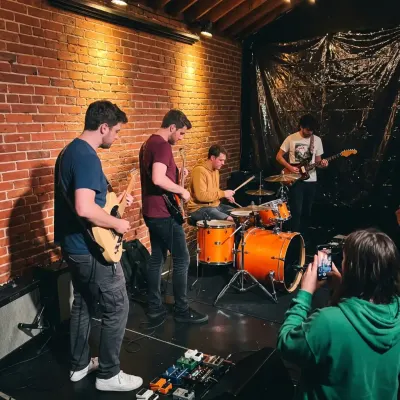
Which band management app do you need? Compare BandHelper, Glissandoo, BandLab, Highnote and Zoundroom for songs, rehearsals, setlists, gigs and splits.

WhatsApp is useful for fast communication, but a band needs a song-first system for versions, feedback, decisions, ownership, and next actions.
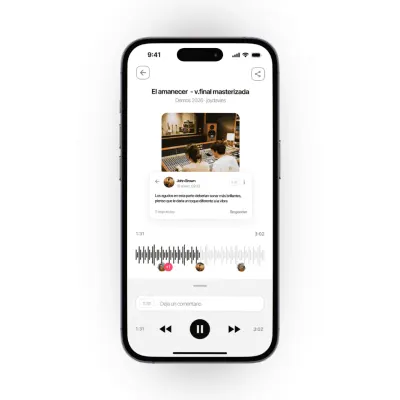
A practical protocol for specific, time-linked, actionable band feedback—without turning the group chat into an archive or the rehearsal into an argument.

Bands lose context, current versions, decisions, and ownership. Diagnose five workflow failures and make every song recoverable.
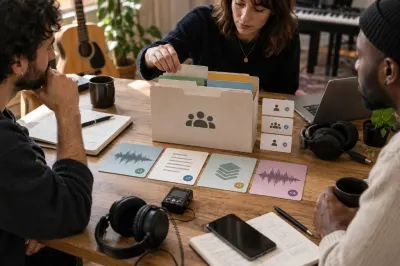
Distribute access and decisions without creating chaos. Use this practical model to remove the organiser bottleneck while keeping clear ownership.
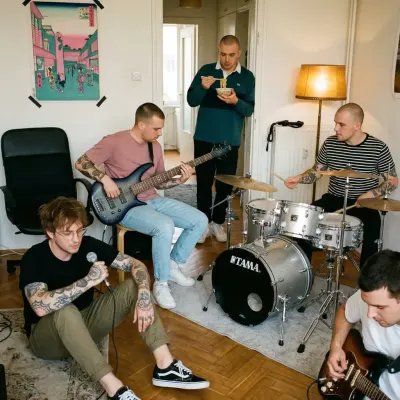
Choose a seed, define ownership, jam with constraints, select one reference, review asynchronously, and finish each stage.
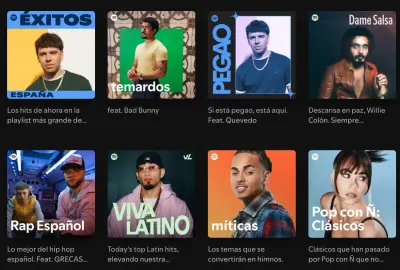
Use collaborative playlists to share references, plan sets, and discuss direction—while keeping song files, decisions, and versions in the right system.
Organize files, permissions, and versions in Google Drive without confusing a folder with the actual state of the song. Includes limits and a clear handoff.

A split sheet lists who wrote a song and each writer's share. See what goes on one, how to split with a producer or a sample, worked examples and a free template.
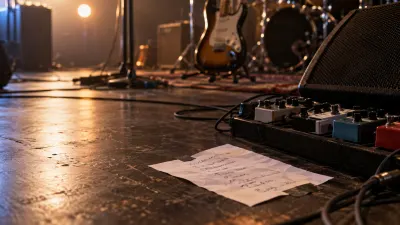
How many songs fit in 30 to 90 minutes, how to order them by energy, key and tempo, two sample sets, transitions and a setlist you can read on stage.

Match the method to the listener: private links, SoundCloud, cloud drives or a shared project. Compare quality, control and cost, avoid leaks, get useful feedback.
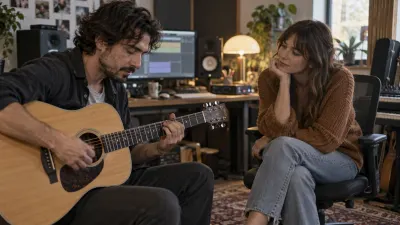
Write for another singer's voice and story, build a pitch with a guide vocal, lyric and chord sheet, reach the right people and agree splits before it goes out.

The seven jobs every band has, how to split them fairly and in writing, songwriting splits vs gig money, and a 15-minute weekly check-in that keeps it moving.
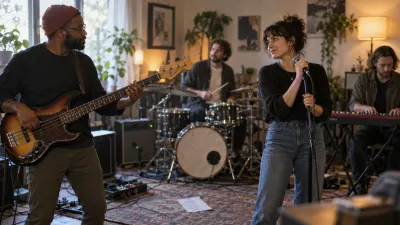
Run a band rehearsal that gets songs ready: set one goal, share demos, keys and tempos first, record the run-through and follow a timed rehearsal plan template.
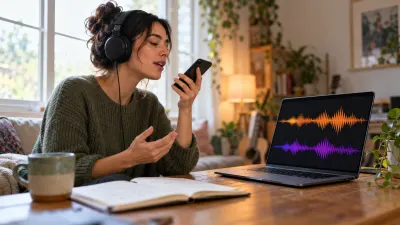
Zoom, Audiomovers, BandLab, Soundtrap, Zoundroom and Google Drive or Dropbox for writing songs at a distance: free plans, prices, platforms and limits.
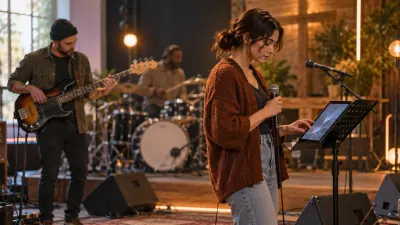
Planning Center, WorshipTools, OnSong, MultiTracks Playback, Loop Prime, CCLI SongSelect and Zoundroom for worship teams: free plans, prices, platforms.
Use generation and assistance with clear limits, human decisions, and verifiable sources.
Two ways to make a song with AI: generate it with a tool like Suno, or write it yourself with AI as your assistant. Steps, prompts, rights and credits.
The best AI for songwriting in 2026: Suno, Udio, BandLab SongStarter, ChatGPT and Zoundroom compared by output, free plan, price and who owns the result.

LANDR surveyed 1,241 music makers about AI. Here is what 87% usage and 46% positive sentiment toward creative AI mean—and what they do not.
Use AI for options, not the song: 7 prompt templates, a generic vs revised verse, an editing checklist, a worked example and who owns AI-assisted lyrics.

Fully AI-generated songs can't be copyrighted in the US, but your lyrics, melody and edits can. What the UK, Canada, Suno's terms and Spotify say in 2026.

ChatGPT, Claude, Gemini, Suno's lyric box, LyricStudio and Auralis compared: free plans, prices, context and what the terms say about your lyrics.

A full songwriting session in ChatGPT or Gemini: set up the chat, write a song card, build the chorus and verses with copyable prompts, then make the melody yourself.
