
How to write a song as a band: a practical workflow
Published · Updated
Choose a seed, define ownership, jam with constraints, select one reference, review asynchronously, and finish each stage.
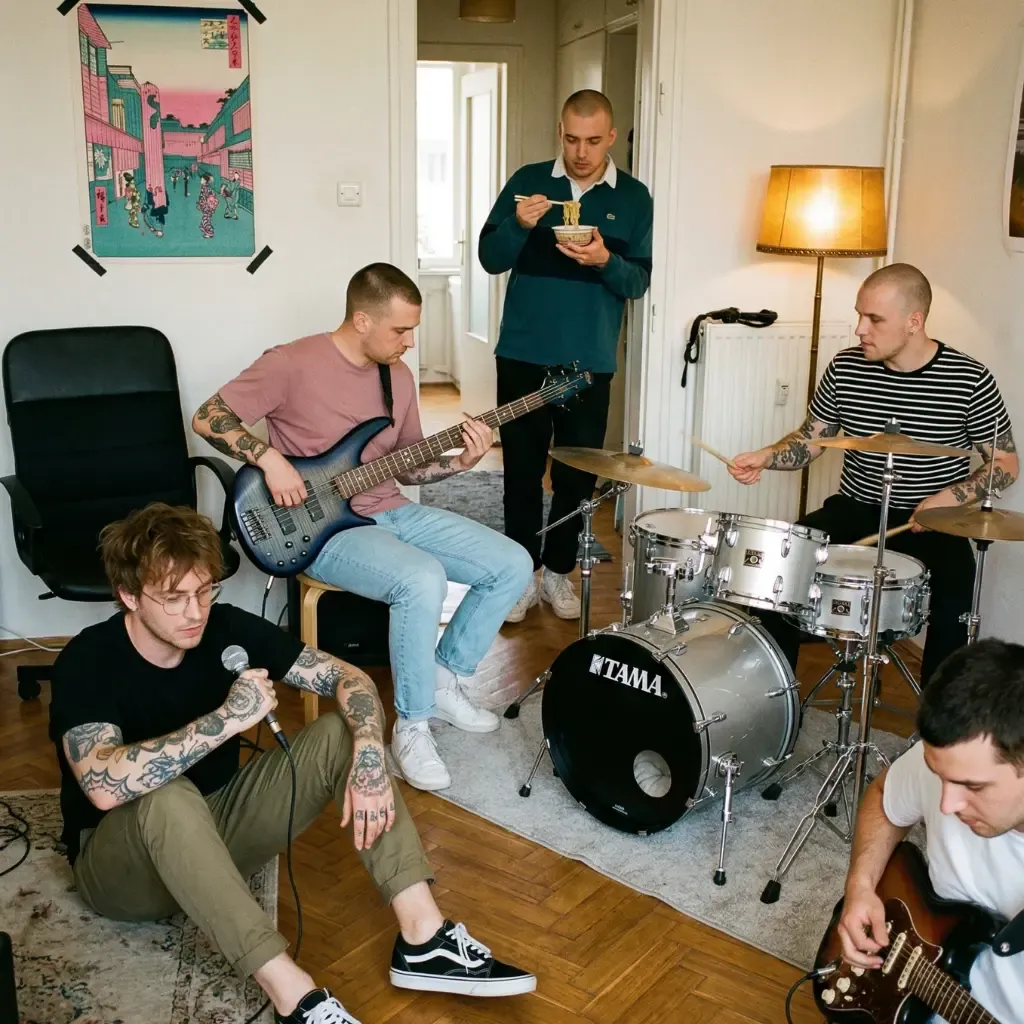
Writing as a band can produce interactions no one member would invent alone. It can also create three hours of playing, ten phone recordings, and no agreed song.
The difference is not whether the band improvises or plans. It is whether the group can turn a shared musical moment into a recoverable decision.
Choose the seed
A band song usually begins with one of four seeds:
- a riff, groove, or chord movement;
- a melody or lyric concept;
- a reference and production direction;
- an improvisation that reveals an interaction.
When the seed is a reference, keep the band’s references in one shared list; the guide to collaborative playlists for bands shows how to stop it turning into noise.
Before expanding it, record the seed alone and name what makes it valuable. “The guitar rhythm against the straight bass” is more useful than “cool jam.”
Name a temporary creative owner
Collective authorship does not require every micro-decision to be made by committee. For the current stage, choose the person who protects the central question and resolves ties.
The owner may change: one member leads the harmonic seed, another shapes lyrics, and another leads arrangement. Make it clear when responsibility passes to someone else.
Ownership is not the same as legal authorship or royalty allocation. Those agreements require a separate, documented conversation. To split that and other jobs in writing, and keep songwriting royalties apart from live fees, see how to divide band member roles.
Jam with one constraint
An unconstrained jam often produces volume rather than selection. Give the session a task:
- keep the riff and test three chorus contrasts;
- improvise only transitions;
- hold tempo and change harmonic rhythm;
- remove one instrument each pass;
- play the same form at two energy levels.
Record complete passes. Stop after a small number and listen back rather than relying on the excitement in the room.
Try three passes with one riff
Choose a riff everyone can play and record three short passes: first with the full band, then without the busiest part, then with a different chorus dynamic. Keep the tempo and section order unchanged so the difference is easy to hear. Listen before debating. Each member names one moment worth keeping; use those moments to build the next complete draft rather than starting another open-ended jam. If the riff wants distorted guitars, how to write a rock song shows how to turn it into a verse and a chorus.
Before sharing this example with your band, check the reference, question and next action with the song sharing checklist.
Select one reference before leaving
At the end of the session, identify:
- the best complete pass;
- any fragment worth preserving separately;
- the working structure;
- what is still unknown;
- who makes the next version.
Rename the reference while everyone remembers it. A rehearsal folder full of timestamps is not a decision.
Develop asynchronously
Not every change needs the whole band in the room. The owner can prepare a tighter demo, a member can propose a bridge, or the lyricist can develop two chorus options. If members live in different cities, these remote songwriting apps cover the live session, the shared studio and the song between sessions.
Every proposal should state:
- which reference it starts from;
- what changed;
- which question it answers;
- whether it is a replacement or an alternative.
For a band-wide review protocol, use how to give music feedback in a band.
Rehearse decisions, not archaeology
Before the next rehearsal, share the current reference and the two or three questions that require playing together. Resolve simple comments in advance. For rehearsal dates, setlists and the songs themselves, this guide to band management apps suggests which tool fits each job.
A productive rehearsal might decide:
- whether the bridge creates enough contrast;
- which tempo makes the vocal credible;
- whether the final chorus needs another harmonic event;
- which arrangement leaves space for the lyric.
It should not begin by searching for the file.
Separate writing, arrangement, and production
These layers interact, but confusing them makes progress hard to judge.
Writing
Core melody, lyric, harmony, form, and defining rhythmic ideas.
Arrangement
Who plays what, section density, entrances, exits, dynamics, and transitions.
Production
Recorded sound, editing, effects, balance, and release execution.
A production experiment can expose a writing problem. Record which layer the next change belongs to so the band knows when a stage is complete.
Define done for each stage
Writing draft done: the song can be performed from beginning to end and the main lyric or musical path is coherent.
Arrangement draft done: the band can reproduce the section order, roles, transitions, and dynamics.
Demo done: the current recording communicates the song well enough for the next decision or collaborator.
Do not call the entire song “unfinished” when one specific stage is waiting for one specific action.
Keep a shared song record
For each active band song, maintain:
- current reference;
- active lyric or chart;
- section map;
- open decisions;
- next action and owner;
- meaningful older versions;
- authorship and split discussions in a suitable separate record.
Bring the three rehearsal passes into one Zoundroom project. Name each audio by the change you tried, put the section order and working lyric in a note, and invite the band to listen. Before the next rehearsal, add one sentence naming the selected take and what each player will prepare. Your band can arrive with the same reference and a clear change to play.
For the broader collaboration system, read how to organise and finish songs as a band. And if the band itself still needs a name, the free band name generator suggests names by style and keeps your favorites.
A band writes effectively when collective energy produces a reference everyone can find and a decision everyone can act on.