
How to Write a Song: A Step-by-Step Guide for Beginners
Published · Updated
Write your first song in one sitting: 8 steps from idea to rough demo, a worked example, audio you can play and free tools for melody, chords and lyrics.
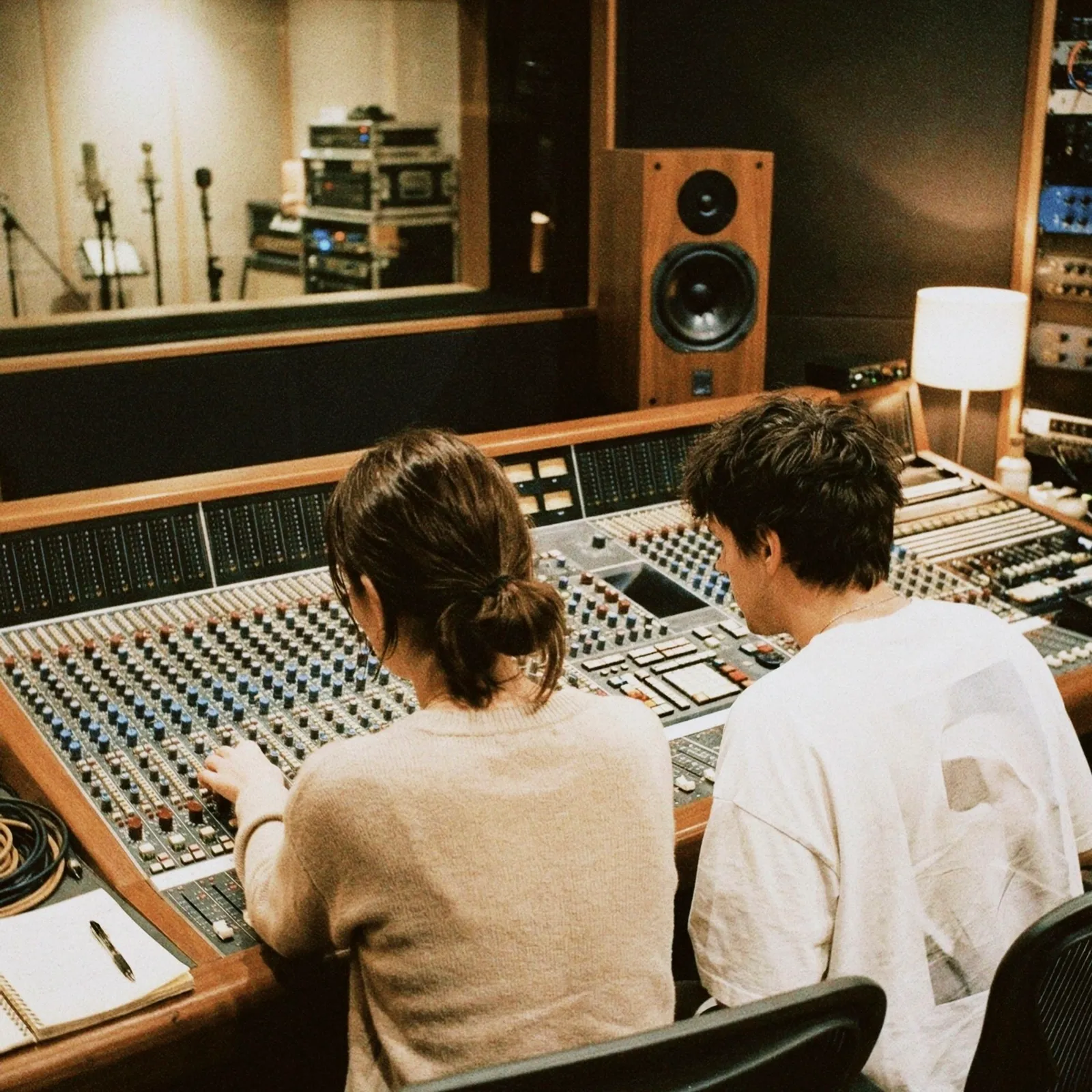
To write a song, pick one idea and give it a short title, start from whatever you already have (a line, a chord loop or a hummed tune), sketch a simple verse–chorus map and write the chorus first. Then find a melody for it, put three or four chords underneath, write two verses that lead into the chorus and record a rough demo you can listen back to. For a first song, that is the whole job: eight steps, one sitting, about an hour.
- Pick one idea and a title: one sentence with a tension, and a short phrase that sums it up.
- Choose a starting point: a lyric line, a chord loop or a melody you hum.
- Sketch the structure: verse – chorus – verse – chorus is enough.
- Write the chorus first: four short lines built around the title.
- Find a melody: speak the words in rhythm, then sing them.
- Put chords under it: one four-chord loop per section.
- Write verse 1 and verse 2: a scene first, then something new.
- Record a rough demo and review it: one full pass, one change, one more pass.
Below, each step comes with an audio example you can play in the page or a free browser tool, and one original song, “Windows Down”, goes through all eight steps so you can see exactly what each one produces.
What you need (and what you don’t)
You need a phone or computer that records, headphones and somewhere to write. You don’t need to play an instrument, read music or know theory beyond counting to four: the free tools below make the sound, and you sing, hum or speak in rhythm. When you later want to arrange the song yourself, this comparison of music-making apps covers free studios such as GarageBand and BandLab as well as AI generators.
| Free tool | Use it in step | What it does |
|---|---|---|
| Song structure planner | 3 | Lists your sections with their bars; reorder, copy or download the map |
| Practice melody | 5 | Four short melodies to sing your words on, with optional chords and a record button |
| Chord progression player | 6 and 8 | Loops a progression in any key, lets you type lyrics bar by bar and record a take |
| Lyric syllable counter | 7 | Counts the syllables of each line so you can compare verses |
None of them needs an account or saves anything for you: copy or download what you make before closing the tab.
Step 1: Pick one idea and a title
A song is easier to write when it is about one thing. Before any rhyme or chord, write one sentence: who is singing, what they want, and what gets in the way. The tension is what gives the verses something to show and the chorus something to say.
Then find the title: the short phrase that sums up that sentence and that you could sing four times without getting tired of it. Good first titles are things people actually say (“Call me back”), an object with a feeling attached (“Your old jacket”) or a contradiction (“Happy for you”). Two to five words is plenty.
If nothing comes, write ten titles in five minutes without judging them and keep the one you would most like to hear sung.
Worked example. The idea: someone drives home on the day they quit a job they hated, relieved and a little scared. The title: “Windows Down”, because it’s the first thing you do when you finally feel free, and because it’s easy to sing on long notes.
Step 2: Choose a starting point: a lyric line, a chord loop or a hum
There is no correct first move. Start from the part of the song you already have, and let the other parts follow.
| Start with | Use it when | First move |
|---|---|---|
| A lyric line | You have a phrase or a title | Say it out loud three times and tap its rhythm on the table |
| A chord loop | You play a little, or you like hearing harmony first | Loop four chords and hum over them until a shape repeats |
| A melody you hum | A tune is already in your head | Record it right now, on “la la” or “da da”, before adding words |
Pick one and leave the other two for later steps: trying all three at once is the quickest way to spend an hour and record nothing. If you start with words, the guide to putting music to lyrics shows how to turn their natural rhythm into notes; if you start with a hum, the melody writing guide helps you develop it.
Worked example. “Windows Down” starts from the lyric: the phrase “windows are down”, spoken in rhythm. Say it and you’ll hear two strong beats with two light syllables between them: WIN-dows are DOWN. That rhythm will decide the chorus melody.
Step 3: Sketch the structure
For a first song, use the shortest shape that still sounds like a song: verse – chorus – verse – chorus. The verse tells the story and changes each time; the chorus says the main idea and comes back with the same words. Listen to a complete map with every common section:
What to listen for: after the count-in, the verse (0:02–0:12) is soft, with no drums, on Am–F–C–G. The pre-chorus (0:12–0:21) switches to an arpeggio on Dm–F–G–G, and that held G from about 0:17 pulls you forward. The chorus arrives at 0:21 with guitar and drums on C–G–Am–F: the same four chords as the verse, started from C, which is why it sounds like arriving home. At 0:31 the bridge brings two chords from outside the key (A♭ and B♭) for a new color, and the last chorus returns at 0:40.
You don’t need the pre-chorus or the bridge yet. Add them in a later version if the song asks for them: the guides to the pre-chorus and the bridge explain when it does, and the song structure guide covers every section in detail.
Write your map in the structure planner: add the sections, give each one its number of bars and reorder them until every repeat has a job; the planner shows how long each section lasts. Its “Start from a common form” menu can also load a typical map (verse–chorus, pop, ballad and more) with its usual tempo, which you then cut down to first-song size.
Worked example. “Windows Down” uses verse 1 (4 bars), chorus (8 bars), verse 2 (4 bars), chorus (8 bars): 24 bars, about one minute at 96 BPM, where one bar lasts 2.5 seconds. A bridge and a final chorus can come later.
Step 4: Write the chorus first
The chorus is the part people remember and the reason the verses exist, so write it first: once you know where the song is going, every verse line has a target.
- Put the title in the first line, the last line or both.
- Keep it to four short lines and say the feeling plainly; the verses will show the details.
- Repeat something. In a chorus, repetition is how a listener learns the song.
The repeated element that sticks is the hook: usually the title phrase, sometimes a rhythm or a riff. The guides on how to write a chorus and how to write a hook go further, with a memory test for your title.
Worked example. The chorus of “Windows Down”:
Windows are down,
the radio loud,
and nothing to lose,
windows are down.
The title opens and closes it. Line three carries the emotion, so it will get the highest note. “Down” and “loud” share the same vowel sound: a near rhyme, which is enough.
Step 5: Find a melody
A beginner’s melody starts from the words. Speak the chorus in rhythm, sing it on a single note, then let the stressed syllables move up or down. Keep the verse lower and busier and give the chorus higher, longer notes. Record every attempt, even the bad ones: a take is evidence you can compare. Some lyric apps save each attempt right under the words it belongs to; five songwriting apps for lyrics are compared on that and on their free plans.
If no tune comes, borrow one to practice on. This is the 20-second practice melody with its chords:
What to listen for: after the count-in (0:00–0:02), you hear four two-bar phrases starting at 0:02, 0:07, 0:12 and 0:17. Each one moves long – short – short – long, with a quick note at the end. The third phrase climbs to the highest long note at 0:15, and the fourth settles on the home note, C, at 0:20, just as the chord returns to C. That shape (build, peak, land) works for most first choruses.
To sing your own words on it, open the practice melody in the lyric guide: pick one of four melodies (practice, 3/4 ballad, upbeat pop or minor key), switch the chords on if you like, type your lines and, with headphones on, press “Record a take”. The take stays in your browser until you download it. When you’re ready to write your own tune, the melody guide explains contour, repetition and range.
Worked example. The chorus of “Windows Down” fits the practice melody exactly. Sing the capitals on the long notes:
| Long | short | short | Long | Quick note |
|---|---|---|---|---|
| WIN- | dows | are | DOWN | the |
| RA- | di- | o | LOUD | and |
| NOTH- | ing | to | LOSE | — |
| WIN- | dows | are | DOWN | — |
Each line has four syllables with the stresses on the first and the fourth, and the quick notes (the, and) already belong to the next line. “Lose” lands on the peak at 0:15; the title lands on the home note at 0:20.
Step 6: Put chords under it
You don’t need many chords. One four-chord loop per section is how a huge number of songs work, and the most common loop of all is I–V–vi–IV, which in C is C–G–Am–F (the verse of “Let It Be” uses it):
What to listen for: after a one-bar count-in, the chords change every 2.5 seconds: C at 0:02, G at 0:05, Am at 0:07 and F at 0:10, and the loop repeats from 0:12. Am, the only minor chord, darkens the loop for a moment; F lifts it back toward C.
Open the same loop in the chord player and hum your melody over it. If a long note clashes with a chord, try another chord under it before changing the melody; if the top note strains, move the key down a semitone or two. With headphones on, the player also records a take over the loop. The guide to chord progressions for songwriting has ten more loops with audio.
Worked example. The chorus of “Windows Down” keeps the chords of the melody it borrowed: C–C–G–Em–Am–F–G–C, one per bar. The verse uses the loop you just heard, but starting on Am: Am–F–C–G. Starting on the minor chord makes the verse sound unsettled, so the chorus on C feels like a release, exactly as in the structure example at 0:21. Here is the whole song as one 12-bar loop, four bars of verse and eight of chorus: open “Windows Down” in the chord player. If you play guitar or piano, all five chords (C, G, Am, F and Em) are beginner shapes.
Step 7: Write verse 1 and verse 2
The verse sets the scene the chorus comments on: where we are, what happens, what someone sees or says. Use things a camera could film instead of naming feelings. Verse 2 must add something new (time moves on, a consequence, another view) so the same chorus means more the second time. The verse writing guide has five fixes for a second verse that only repeats the first.
Both verses share one melody, so their lines should be about the same length. Paste them into the syllable counter, one line per row, and look for the line clearly longer than its neighbors: that one will rush. The guide to syllables and stress shows how to fix it, and the guide to types of rhyme explains why near rhymes often beat perfect ones.
Worked example. In “Windows Down” each verse line takes one bar, so it needs six to eight syllables with room to breathe. The first draft of line three was “and the steering wheel was burning like a stove in the sun”: fourteen syllables, twice what the bar can hold. Cut to the image, it becomes “steering wheel hot as a stove”.
| Verse 1 | Syllables | Verse 2 | Syllables |
|---|---|---|---|
| Left my badge on the desk at five, | 8 | Rent’s due Friday, half in the bank, | 8 |
| no one looked up to say goodbye, | 8 | sister texting, “What’s the plan?“ | 7 |
| steering wheel hot as a stove, | 7 | No answer yet, just the sun, | 7 |
| turned the key and let the week go. | 8 | a full tank and a road to run. | 8 |
Verse 1 shows the escape. Verse 2 adds the fear: the rent is only half there. Now “nothing to lose” in the next chorus sounds braver, even a little reckless. Same words, new meaning: that’s what a second verse is for.
Step 8: Record a rough demo and review it
A rough demo is a recording of the whole song, first line to last, clear enough to judge. It doesn’t need to sound good; it needs to exist. The guide to what a demo is lets you hear the difference between a quick capture and a demo with chords, and the guide to recording a demo at home covers the room, levels and phone placement.
- Put on headphones and play your loop, or play the chords yourself.
- Record one full pass without stopping, even if you stumble.
- Take a five-minute break, then listen once without reading the lyric.
- Write down three things: where your attention dropped, which words you couldn’t understand and where you ran out of breath.
- Change one thing only, and record a second full pass.
Worked example. “Windows Down” is recorded over the 12-bar loop: verse 1 and the chorus the first time round, verse 2 and the chorus the second, one minute in total. The notes: “steering wheel” blurs; the jump into the chorus feels sudden; “nothing to lose” works. The one change for pass two: breathe before “Windows”. A bridge can come next session, and if the song stalls, the guide to finishing a song when you’re stuck helps you name what is missing.
Your first song in one hour
| Minutes | Do this | You finish with |
|---|---|---|
| 0–5 | Write ten titles, keep one, write the one-sentence idea | A title and a tension |
| 5–10 | Choose your starting point and record it | A spoken line, a loop or a hum |
| 10–15 | Map verse – chorus – verse – chorus in the planner | A 24-bar map |
| 15–25 | Write four chorus lines around the title | A chorus |
| 25–35 | Sing it on the practice melody or hum your own; record two takes | A melody you can repeat |
| 35–40 | Loop the chords and check the long notes | A chord loop per section |
| 40–50 | Write verse 1 and verse 2; count the syllables | Two verses |
| 50–60 | Record a full pass, listen once, change one thing | A rough demo and a next step |
If you’d rather spread the work over a week, the free songwriting course turns these steps into ten short lessons, each with an exercise and a tool. On days when no idea comes at all, a short songwriting exercise gets you moving again.
Principles to keep in mind
- Know the center of the song. Judge every line against your one-sentence idea; a line that doesn’t serve it goes to another song.
- Record before you polish. A rough take with one note (“keep the pause before the last line”) beats a perfect idea you can’t remember.
- Give every section a job. If two sections do the same work, change one or cut it.
- Test words, melody and chords together. A lyric that reads well can fight the tune: sing it, don’t just read it.
- Create first, judge later. Write options without defending them, take a break, then choose. Limits help when you’re stuck: four lines, one loop, a one-minute version first.
- Define “finished for now”. A complete journey, a stable chorus melody and a current recording make a finished draft. When you share it, ask one specific question (“Does verse 2 tell you something new?”) instead of “What do you think?”
Behind these principles sit named methods you can practice one at a time; songwriting techniques lists 22 of them with original examples.
Common beginner mistakes and how to fix them
| Mistake | Fix |
|---|---|
| Waiting for the perfect idea | Pick a good-enough idea and give it one hour; finishing teaches more than ten openings |
| Polishing the first line for an hour | Draft every section roughly first, then revise in separate passes |
| A long chorus with no title in it | Four short lines, with the title in the first or last line |
| Lines that rush | Count syllables and cut filler words; keep matching lines within one or two syllables |
| Verse 2 repeats verse 1 | Move time forward or add a consequence, like the rent in “Windows Down” |
| The chorus sits too high or too low | Change the key in the chord player, or sing the verse lower so the chorus can rise |
| Nothing recorded at the end | Record every attempt; the take is what you’ll revise from tomorrow |
Where Zoundroom fits
By step 8 your song is scattered: the lyric in a notes app, a hummed chorus in your phone’s recorder, a take downloaded from the chord player and the chords on a scrap of paper. In Zoundroom, the songwriting app, each song is a project, so create one called “Windows Down” (or your own title) and open a note inside it. Paste the lyric with the chords written above each line, then record your next pass directly inside the note: the audio is inserted where your cursor is, so the take sits under the lines it belongs to and you can read along while it plays. Import the chord-player take into the project and insert it into the same note. Then write one line under the newest take saying what you’ll change in the next pass, and invite a friend to the project; if they have Pro or Band, their comment stays next to the recording.
Frequently asked questions
How do I write a song as a beginner?
Keep it small: one idea and a title, a four-line chorus around the title, a melody built from the rhythm of the words, one four-chord loop, two short verses and one recording of the whole thing. Verse – chorus – verse – chorus is a complete first song.
Should I write the lyrics or the melody first?
Start with whichever you already have. If a phrase came first, build the melody from its rhythm; if a tune came first, record it on “la la” and fit words to it. Either way, put the two together early: words and melody tested together only at the end rarely fit.
How long does it take to write a song?
A first rough version takes about an hour with the plan above; rewriting a verse, adding a bridge or improving the melody can take a few more sessions. There is no correct speed. What matters is ending each session with a recording.
Do I need to play an instrument to write a song?
No. You can write a complete song with your voice and the free tools: sing on the practice melody, loop chords in the chord player and record over them. If you want a fuller arrangement later, a friend who plays or a producer can build it from your demo.
How can I write a song with no experience?
Borrow the pieces you don’t have yet. Use a common four-chord loop, a verse – chorus – verse – chorus map and the practice melody, and write only four chorus lines and eight verse lines. The worked example above does exactly that. If you want a guided path over several days, follow the free songwriting course one lesson at a time.