
How to write a viral song for TikTok, Reels and Shorts
Published
No formula guarantees a viral song. What gives one a real chance on TikTok, Reels and Shorts: a hook in seconds, a reusable moment, a loop and snippet tests.
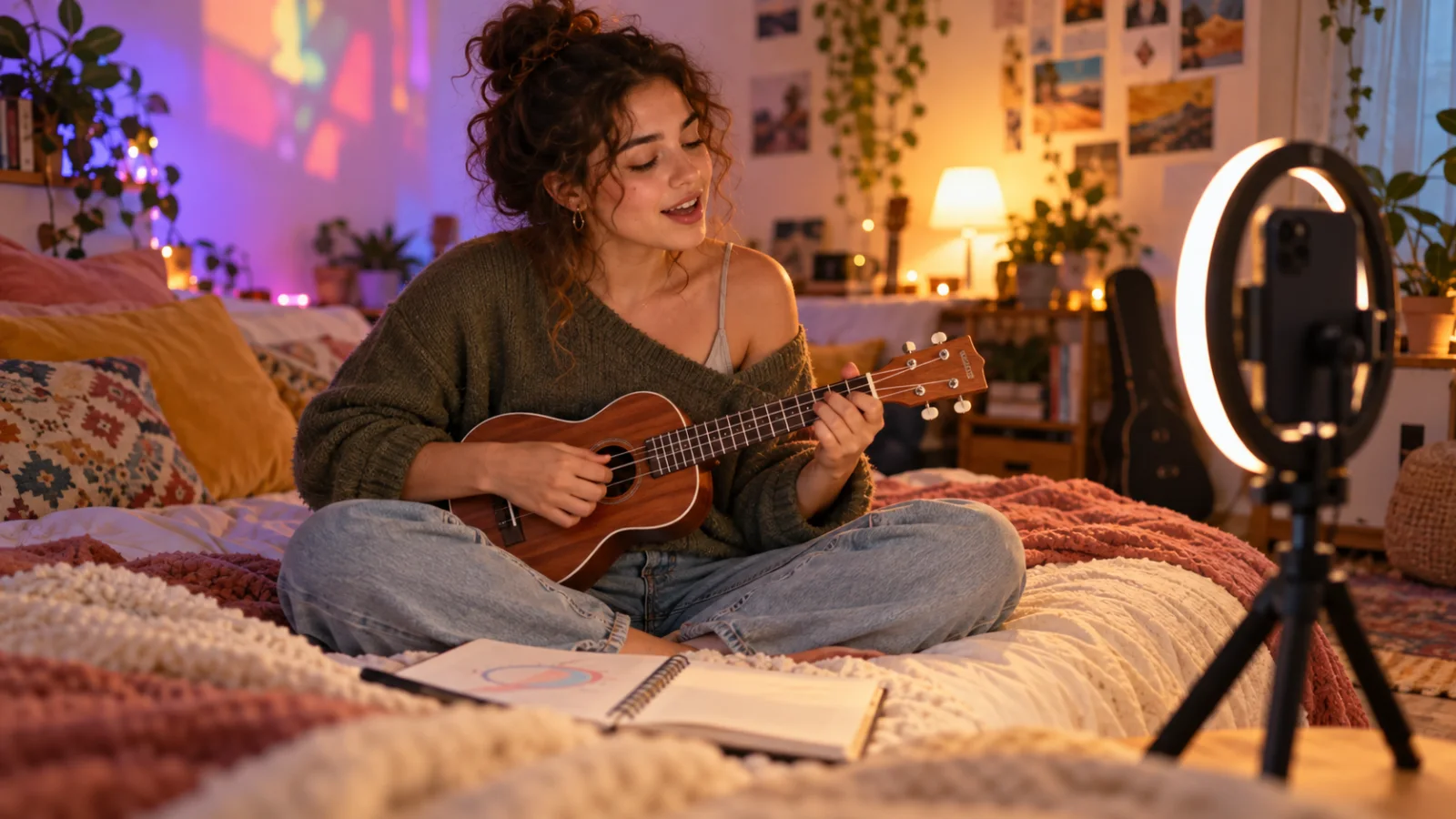
Nobody can tell you how to write a viral song that is guaranteed to go viral: there is no formula, and anyone selling one is guessing. What you can do is write a song that gives short video a reason to use it. Put the hook in the first seconds, build one moment people can reuse (a line they can quote, a situation, a gesture, a gap for a duet), shape a 10 to 20 second section that loops cleanly, and test two or three snippets before you release anything. Then read the comments, keep the version that people actually reused, and finish the full song around it. That is how to make a song with a real chance on TikTok, Instagram Reels and YouTube Shorts.
Below: what “viral” honestly means, the four ingredients with an original worked example, the platform facts that matter (checked on official pages on October 2, 2026), a snippet test plan and a template to copy.
What “viral” means, and what nobody can promise
A song goes viral when other people start using it in their own videos, not when your own video gets views. That part is out of your hands: timing, who picks it up, what the platforms decide to show. Two songs written with the same care can get completely different results.
The platforms do publish their own numbers. In a report TikTok commissioned from Luminate (published February 13, 2025, about 2024), TikTok says 84% of the songs that entered the Billboard Global 200 that year had “gone viral” on the app first. Read it for what it is: the platform’s own study, and a correlation. It says nothing about the songs that went viral and never charted, or about the far larger number that never took off.
So treat a viral moment as a lottery ticket you can improve, not a plan. The ticket gets better with a strong hook, a reusable moment and a real song behind it. That last part matters: a 15-second clip with nothing after it can be used for a week and forgotten; a finished song gives new listeners somewhere to go.
How to write a TikTok song: the hook in the first seconds
People scroll fast, so the snippet you post should start in the hook or one line before it. No intro, no slow build, no “wait for the drop”.
What helps a hook land that fast:
- The key phrase early. The title or the line people will remember arrives in the first seconds and comes back at least once in the clip.
- A small melody. Few notes, mostly by step, easy to sing back on the second listen. If you need a wide range, save it for later in the song.
- One clear image or situation. “I practiced saying no in the mirror” is a scene; “my feelings are complicated” is not.
- Contrast. A stop, a beat of silence, a jump to a higher note: something the video can cut on.
The guides on how to write a hook and how to write a chorus go deeper into melody and repetition. Here’s what a short, repeatable hook sounds like:
After a short count-in (0:00–0:02), an eight-note phrase over two bars starts at about 0:02 and repeats at about 0:07, 0:12 and 0:17. Notice how little it takes: one phrase lasts under five seconds at 100 BPM, and by the third time you can hum it. That’s the length of material a short video lives on. (It’s a synthesized teaching example, not a finished track.)
Give people something to do with it: the reusable moment
A song spreads on short video when people can put themselves into it. Before you finish the lyric, decide what the viewer will do with your sound. These are the usual shapes:
| Reusable moment | What it looks like | Original example line |
|---|---|---|
| Quotable line | A sentence people use as a caption for their own story | ”I practiced saying no in the mirror” |
| POV or situation | A scene viewers act out or film from their own life | ”Me at 2 a.m. rewriting the text I already sent” |
| Gesture or cut point | A word or a beat of silence where a video can switch outfits, places or faces | A full stop after “called”, then the band comes back |
| Duet or answer gap | A line left unanswered so others can sing or say the reply | ”So what did I say?” followed by one empty bar |
| Fill-in-the-blank | A list or a pattern others can rewrite with their own words | ”Three things I never told you: one…” |
Pick one per song, not all five. A clear single use is easier to copy than a clever mix. TikTok has Duets and Stitch, Instagram has Remix and YouTube lets you make Shorts available to remix, so a duet gap has a native place to happen on all three.
Write a short section that loops
The part you post should loop: when it ends, the start can follow without a bump. Two things make that work.
Count the length. In 4/4, one bar lasts 240 ÷ BPM seconds. At 100 BPM a bar is 2.4 seconds, four bars are 9.6 and eight bars are 19.2. At 120 BPM, eight bars take 16 seconds. So the snippet you’re writing is usually four or eight bars. Use the tap tempo metronome to find the BPM you’re singing at.
Close the circle. End the section on a chord that leads back to the first one (in C–G–Am–F, the F wants to go home to C) and let the last line connect with the first, by rhyme or by meaning. Then press play on repeat and listen for the seam. You can loop the progression under your voice in the chord progression player.
You don’t need to cram the song into seconds, though. Here is what the platforms say about length and music today:
| Platform | How music gets into a video | Length facts (checked October 2, 2026) |
|---|---|---|
| TikTok | ”Add sound” from the library, with a slider to pick the starting point; or your own recording, posted as an original sound that others can use | Business accounts can only use music licensed for commercial use |
| Instagram Reels | Music from the Instagram library, or original audio recorded in the app or in an uploaded video; Remix | Reels can be recorded and edited up to 20 minutes, but reels over 3 minutes aren’t recommended to new audiences |
| YouTube Shorts | The Shorts audio library, royalty-free tracks from the YouTube Audio Library, or audio remixed from other videos | Since October 15, 2024, vertical videos up to 3 minutes count as Shorts; most songs can be used for up to 90 seconds, some only 60 or 30; a Short over 1 minute with an active Content ID claim is blocked |
The practical point: your own recording is what people reuse at first, so the first seconds of it have to carry the song.
Worked example: one line, three snippets
Here’s the method on an original idea, written for this guide. The situation: you swear you’ll finally say no to someone, rehearse it, and fold the moment they call.
The hook (chorus), C–G–Am–F at 100 BPM:
I practiced saying no in the mirror I had it down, I had it all I practiced saying no in the mirror It sounded so good till you called
The reusable moment is the cut after “called”: the band stops for one beat, the phone rings, the video can switch from “rehearsing” to “picking up”. “All” and “called” are a near rhyme, which is enough for a hook (the rhyming dictionary helps if you want options).
A verse that sets it up:
Wrote it on my hand in a ballpoint pen Two little letters, said them again and again
Now three snippets, each eight bars (about 19 seconds):
- Cold open: the chorus from its first word, ending on the stop after “called”. It tests whether the hook works with no context.
- Setup first: the two verse lines, then the first half of the chorus. It tests whether the story makes people stay.
- Duet gap: the full chorus, then one empty bar with an on-screen line: “so what did you say?”. It tests whether people want to answer.
Film all three the same way (same light, same framing), so the difference you see comes from the song, not the video.
Test snippets before release, and read the comments
Posting snippets before a song is out is how many artists find out which part works. A simple plan:
- Post one snippet every few days from your own account, not all three at once.
- Wait a few days per snippet before you judge it.
- Compare against your own usual posts, not against someone else’s viral video. Two or three times your normal numbers is a signal.
- Look past views. The signs that matter for a song: people quoting the line in the comments, saving and sharing the video, asking “full song?” and, above all, using your sound in their own videos.
- Write down what you learned next to the song: which snippet, what date, what people said.
Two cautions. A snippet you post is a piece of your work made public, so keep dated versions and look at how to copyright and register a song before you post anything you care about. And only post music you have the rights to: a beat you found online or a sample usually comes with a license that says what you can do with it.
Then finish the full song
The snippet is the door; the song is the room. Once one version gets a reaction, write the rest around it:
- Keep the hook exactly as people heard it. Same words, same melody, same key, so the official release matches the sound they know.
- Make the verses go further than the snippet. New details, a second scene, a change in the story. If the chorus is the rehearsed “no”, the second verse can be what happened after the call.
- Don’t drag the intro back in. Get to the hook quickly in the full version too. How long a song should be has the section timings, and how to write a pop song covers the full structure.
When you release it, you’ll go through a distributor (see the music distribution guide); check which platforms it delivers to, short-video apps included. TikTok has its own platform, SoundOn, for music marketing and distribution, which uploads releases to TikTok and to services like Spotify and Apple Music; check on its site whether it works in your country and what its terms are today. On YouTube, label and distributor partners can deliver a “Shorts preview”: a snippet that appears in the Shorts music library before the full song is out.
Common mistakes
- A long intro. If the first seconds are guitar noodling, the video is gone before the hook.
- Writing only the 15 seconds. If the clip takes off and there’s no song, you’ve lost the moment.
- Chasing a trend sound you don’t own. Riding someone else’s audio can bring views to your video, but not to your song.
- A hook nobody can sing. Too many words or too wide a range, and people can’t lip-sync or join in.
- Buying views or followers. Leaving aside the platforms’ rules, fake numbers ruin the one thing your test is for: knowing what real listeners do.
Template to copy
Song title:
Hook line (said in the first 3 seconds):
Reusable moment (quote / POV / cut point / duet gap / fill-in):
Loop: from bar __ to bar __ · BPM __ · length __ s
Last chord leads back to the first? yes / no

Snippet A (cold open): starts on ____________
Snippet B (setup first): starts on ____________
Snippet C (duet gap): empty bar after ____________

Posted:   A __/__   B __/__   C __/__
What happened (comments, saves, people using the sound):
Version that worked:
Next step for the full song:
Where Zoundroom fits: every version of the hook in one project
A song like this lives in pieces: three hook takes, the lyric, the dates you posted each snippet and what people said. In Zoundroom each song is one project, so you can record every version of the hook inside the lyric’s note (the audio lands right where your cursor is), write under each take which snippet you posted and what the comments asked for, and import the audio of the take that worked so the full song starts from it. If you write with someone else, share the project with them (the Free plan shares with up to 2 artists). Zoundroom doesn’t post to TikTok or measure views, doesn’t generate audio, has no virtual instruments or beats, and isn’t where you mix and master the final track (a DAW like GarageBand or BandLab is). Your next step: create the project, record all three hook versions tonight, and note which one you’ll post first.
FAQ
Is there a formula for a viral song?
No. Hooks that land early, a moment people can reuse and a section that loops improve your chances, but no structure, length or BPM guarantees anything. Be wary of anyone who promises virality for a price.
How long should a TikTok song snippet be?
There’s no official ideal length. Most snippets that work are four or eight bars, roughly 10 to 20 seconds, because that’s easy to loop and to film. The platforms allow much longer videos, so length is a writing choice, not a limit.
Should I post my song before it’s released?
Posting snippets is a common way to find out which part works, and it can build demand before the release. The trade-off: the idea is public. Keep dated versions, document your authorship and, if you work with a label or a co-writer, agree on it first.
Do I need a distributor to get my song on TikTok as a sound?
Not for a first test: your own recording, posted from your account, becomes an original sound others can use. To have the official track in TikTok’s music library and on streaming services, you release it through a distributor that delivers to TikTok, such as TikTok’s own SoundOn.
Can AI write a viral song for me?
AI tools can write lyrics or generate whole tracks, but none can promise that a song will spread, and you need to check what their terms say about rights. If you use AI, use it for ideas and rhyme options and keep your own voice, story and melody: that’s what people connect with.
Sources
Pages checked on October 2, 2026.
- TikTok Support, “Sounds”: add a sound from the library, trim it with a slider, changing the music replaces the previous background music and voices, Business accounts limited to music licensed for commercial use. support.tiktok.com
- TikTok Support, “Duets”: TikTok’s feature for recording next to another video. support.tiktok.com
- TikTok Support, “Remove original sounds”: other creators can use your original sound; removing it takes it off every video that uses it. support.tiktok.com
- TikTok Newsroom, “TikTok and Luminate release the latest Music Impact Report” (February 13, 2025): report commissioned by TikTok; 84% of songs entering the Billboard Global 200 in 2024 “went viral” on TikTok first. newsroom.tiktok.com
- TikTok Newsroom, “SoundOn is now available in Canada” (May 24, 2023): SoundOn as TikTok’s platform for music marketing and distribution, uploading to TikTok, Spotify, Apple Music and more. newsroom.tiktok.com and soundon.global
- Instagram, “Reels”: record and edit up to 20 minutes, Instagram music library or original audio, Remix, tracks can be muted when agreements with rights holders change. about.instagram.com
- Instagram Help Center, reels length: reels over 3 minutes aren’t recommended to new audiences. help.instagram.com
- YouTube Help, “Understand three-minute YouTube Shorts”: vertical videos of 1 to 3 minutes count as Shorts since October 15, 2024; Shorts over 1 minute with an active Content ID claim are blocked. support.google.com
- YouTube Help, “Music eligibility for YouTube Shorts”: most songs usable for up to 90 seconds, some limited to 60 or 30; Shorts audio library and YouTube Audio Library. support.google.com
- YouTube Help, “Deliver Shorts previews”: label and distributor partners can deliver a preview snippet that appears in the Shorts music library before the full release. support.google.com
- YouTube Help, “Make your Shorts available to remix”. support.google.com