Capture the spark: how to record your musical ideas anytime, anywhere
5 AM on the tour bus, noodling around. 80% of music ideas are born outside the studio. The struggle isn't capturing them—it's not losing them later.
Eliseu Bellés · Founder of Zoundroom. Musician and entrepreneur from Valencia. I am building Zoundroom so musicians stop losing their best ideas.
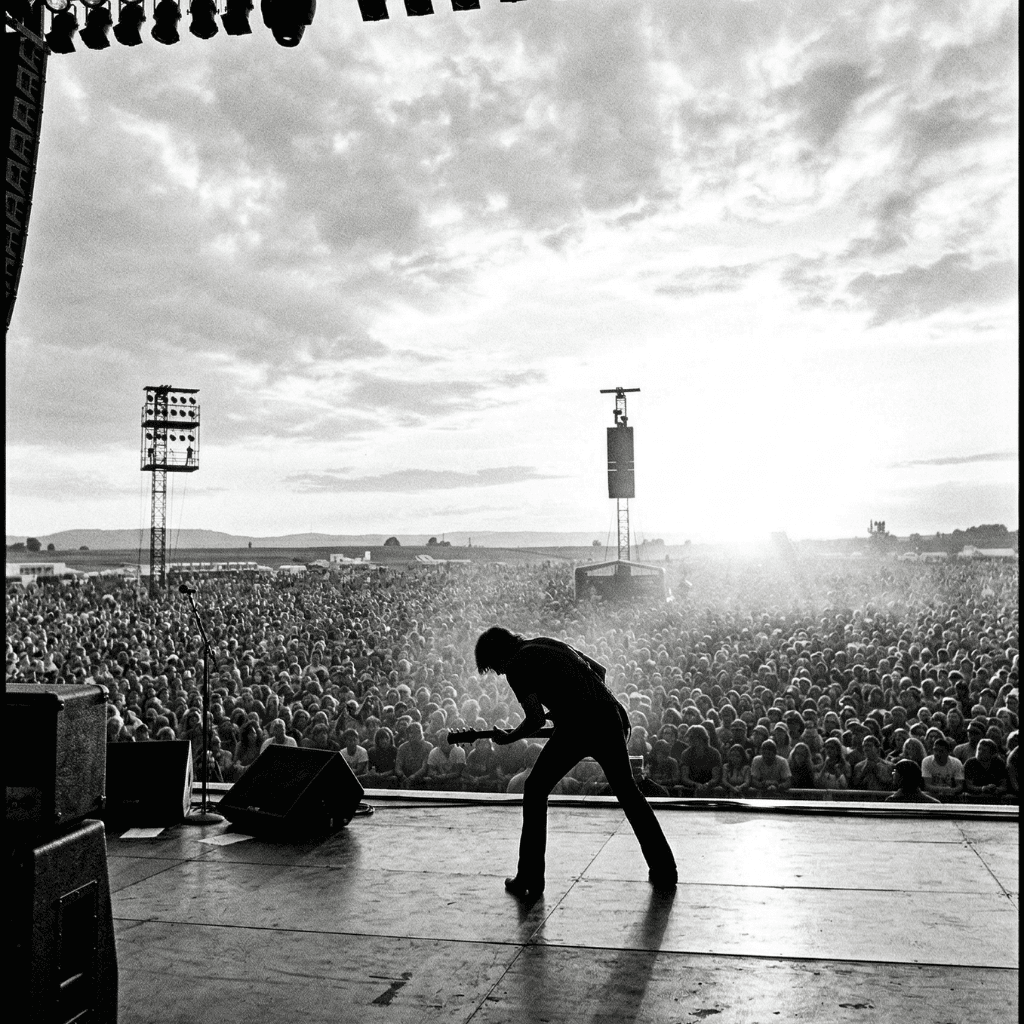
Musical inspiration doesn’t wait: why 80% of ideas are born outside the studio
It’s 5 AM. You’re half asleep. And suddenly, a melody hits. Clear, defined, with that spark you just know is good. You don’t know where it came from. You just know that if you don’t record it now, you won’t remember it tomorrow.
You get up, grab your phone, open the voice recorder, and hum for 20 seconds with a raspy, quiet voice so you don't wake anyone up. You press save. The recording is named "Recording 147." You go back to sleep.
Three weeks later, you don’t even remember that recording exists. It’s buried under 60 other nameless voice notes. That 5 AM melody—the one you knew was great—is lost. Not because you didn’t record it, but because the system failed after the capture.
In our conversations with musicians and bands, this scenario came up constantly. One songwriter told us: "I don’t care what time it is, if a progression comes to me at 5 AM, I record it or write it down." Another musician shared that 85% of his ideas emerge while playing his instrument at home with no specific goal in mind. Another records melodies by humming them on the street while walking.
The pattern is clear: musical inspiration doesn't strike in the studio. It strikes in real life.
Where musical ideas are actually born
There is a romantic myth about songwriting: the musician sits in their studio, concentrates, and the ideas flow. The reality shared by bands is completely different.
In bed, at impossible hours
Late-night inspiration is so common that almost every musician we interviewed brought it up. Melodies that appear right when you're drifting off. Chord progressions that wake you up at 3 AM. Lyrics that hit in that state between sleep and wakefulness, where the brain makes connections it never would during the day.
Science has an explanation for this: the hypnagogic state (the transition between wakefulness and sleep) reduces rational thought control, allowing the brain to combine ideas more freely. This is the same state many artists and scientists have credited as the source of their best ideas. For musicians, it translates into melodies that seem to appear "out of nowhere" right when you should be sleeping.
The problem is that these ideas are the most fragile. If you don't capture them at that exact moment, they evaporate with sleep. Keith Richards recorded the riff for "Satisfaction" half-asleep with a recorder on his nightstand. If he hadn't had it there, rock’s most famous riff wouldn't exist.
While noodle-playing with no goal
Another recurring pattern: the best ideas arise when you aren’t trying to write. You’re playing guitar on the couch without thinking about anything. You’re improvising on the piano while waiting for water to boil. You’re tapping a beat on the table while on the phone.
A pianist told us that the vast majority of her ideas are born while playing without a fixed goal. She isn't sitting down thinking, "I'm going to write a song." She’s just playing. And suddenly, something sounds good. One chord leads to another. A melody forms on its own. The creative moment appears when you aren't looking for it.
Those moments are valuable precisely because they are spontaneous. The brain is in "exploration" mode, not "production" mode. In this state, the most interesting combinations emerge because there is no self-censorship filter.
On the street, in transit, on the move
Some musicians told us their ideas hit while they’re walking, riding the bus, or working out. Physical movement seems to trigger something in the creative brain. A lyric line that pops up while running. A rhythm that clicks with the rattling of the train. A melody you hum while walking down the street.
The problem with these ideas is that they strike at the most impractical times to record. You are in public, you don’t have your instrument, you can't sing at the top of your lungs. All you can do is pull out your phone and record a quick hum. 15 seconds. Just enough so the idea isn't lost.
During jam sessions
For bands who jam together, the strongest ideas are born in jam sessions. Several groups told us they lock themselves in rehearsal rooms or rural cabins to play for hours. Riffs, progressions, structures, and dynamics emerge from these sessions that would never have come from individual songwriting.
The challenge with jam sessions is the sheer volume of material they generate. A two-hour session can produce dozens of ideas. If they aren’t recorded and organized immediately, most are forgotten. The heat of the moment makes them feel unforgettable. But two weeks later, no one remembers exactly how that "killer riff" went.
The problem isn't capturing. It's what happens after.
If you look closely, in all the scenarios above, musicians do the same thing: they pull out their phones and hit record. The capture happens. That’s not where the issue lies.
The problem is what happens in the 5 minutes (or 5 days) after the capture. Specifically, three things almost no one does.
They don't name them
The recording saves under an automatic name. "Recording 147." Or worse: with the phone's GPS location. One musician told us his audio files were saved under names like "Jose Chavas Street." Finding a specific idea among 100 files named after streets is impossible without listening to them all.
Naming a file takes 5 seconds. "A minor fast riff." "Sad chorus melody." "Funk bass idea." It doesn't have to be poetic. It just has to be identifiable. Those 5 seconds right after recording are the difference between a recoverable idea and a lost one.
They don't connect them to anything
The recording sits in isolation. It isn't linked to a project, a song, or any other idea. It’s an isolated file among dozens of isolated files. If you later write a lyric that fits that melody, the lyric goes into another app. Connecting the two relies entirely on your memory. And memory fails.
They don't review them
Ideas pile up, never to be heard again. They are captured and forgotten. Weeks later, the musician has 30 recordings they haven't listened to since they made them. Going through them all feels like a chore, so it gets pushed off. "I'll review them this weekend." The weekend passes. The ideas sit there—unheard, unprocessed, worthless.
In our interviews, one musician summed this up perfectly: bands have a "file graveyard" where ideas go to die. Not due to a lack of inspiration, but due to a lack of a system.
How to turn spontaneous inspiration into finished songs
Inspiration outside the studio is a gift. It’s your creative brain working without pressure, agendas, or filters. But a gift left unopened is useless. Here is a 4-step system to turn those 5 AM ideas into finished tracks.
Step 1: Capture in under 5 seconds
When the idea hits, your only goal is to lock it down. Audio quality doesn't matter. It doesn't matter if you're in pajamas, on the street, or in the bathroom. Pull out your phone, record. 10, 15, 20 seconds. Just enough for the idea to exist outside your head.
The 5-second rule: if opening the app and starting to record takes more than 5 seconds, there is too much friction. Every extra second is a chance for the idea to slip away or fade.
Step 2: Name it in 5 more seconds
Right after recording, before putting your phone away, take 5 seconds to give it a basic name. Not a clever title—a functional description. "Slow verse melody." "Aggressive guitar riff." "A major chorus." 5 seconds now will let you find this idea a month down the road.
If you can also link the recording to an existing project (if you already know which song it's for), do it. Connecting the idea to a project immediately keeps the recording from becoming an orphan file.
Step 3: Add a quick context note
If possible, type a brief note right after recording. "Could work as the intro for the bridge song." "Try with lyric from the blue notebook." "Faster tempo than this recording." These notes capture the context your future self will need to understand what you had in mind. Without them, the recording is just a directionless sound.
Step 4: Review weekly
Once a week, take 15 minutes to listen to everything you captured. Decide for each idea: does it have potential? Does it fit an existing project? Is it standalone material? Should it be discarded? This weekly review turns an archive into a functional pipeline. Without it, ideas just pile up and lose value.
How Zoundroom protects your 5 AM ideas
Zoundroom is built to help spontaneous ideas survive the chaos of daily life.
Capture in 2-3 seconds. Open the app, hit record. The recording lands straight inside your workspace, not in a generic list of phone audio files. No app switching, no exporting or importing needed.
Recordings are born with context. You can link it to an active project right when you record. If you aren't sure which song it belongs to, it stays in your ideas inbox. Either way, it won't get lost among nameless files.
Notes stored next to your audio. Add a quick note right after recording: "for the bridge song," "try slower," "lyrics are in Project X." The context stays attached to the idea.
Clear, visual reviews. When you sit down to review your ideas, you see everything you captured that week alongside the names and notes you gave them. Drag ideas into projects, update statuses, and decide what to develop next. A 15-minute review turns random voice notes into real material.
If you're in a band, everything is shared. The idea you record at 5 AM can be in your band's shared workspace 5 seconds later. Your bass player can hear it the next morning over breakfast. By rehearsal time, everyone knows the idea exists. No need to send audio files back and forth on WhatsApp or fish them out of a 200-message chat.
Frequently Asked Questions
Is capturing spontaneous ideas really that critical?
Yes. Ideas that hit outside the studio—effortlessly, when you aren't trying to write—are often your most genuine. The creative brain works best when under no pressure. If you don't capture those ideas, you are throwing away the material your mind produces naturally. It’s like having a well and letting the water run dry.
Isn't my phone's built-in recorder enough?
For pure capture, yes. But native recorders don't give you context, don't link audio to projects, and don't let you review things systematically. Captured audio is only 20% of the puzzle. The remaining 80% is what you do with the idea after you record it.
How many ideas should I capture a day?
There is no magic number. Some musicians record one a day. Others capture five in a busy week and then go two weeks without recording anything. The frequency doesn't matter. The habit of hitting record whenever something sounds good—without judgment or filters—does.
What if I record lots of ideas but never develop them?
That is a review issue, not a capture issue. If you capture a lot but don't review them weekly, they just pile up. A weekly 15-minute review is the bridge between capture and composition. Without review, you are just collecting files.
Your next big track could hit at 5 AM
You don't know when it's coming. You don't know where. You don't know if it will be a riff, a melody, a lyric line, or a rhythm you tap on your leg while waiting for the bus. The only thing you know is that if you don't capture it, name it, connect it, and review it, that idea is gone forever.
Inspiration does its part—striking without warning at impossible hours and inconvenient places. Your part is having a system ready to catch it.
Download Zoundroom for free and don't let your next 5 AM idea slip away with your sleep.