AI for songwriting: a guide for artists who create, not delegate

Suno generates songs. Zoundroom helps you write your own. Discover how to use AI as a creative assistant while keeping your unique sound.

Eliseu Bellés · Founder of Zoundroom. Musician and entrepreneur from Valencia. I am building Zoundroom so musicians stop losing their best ideas.

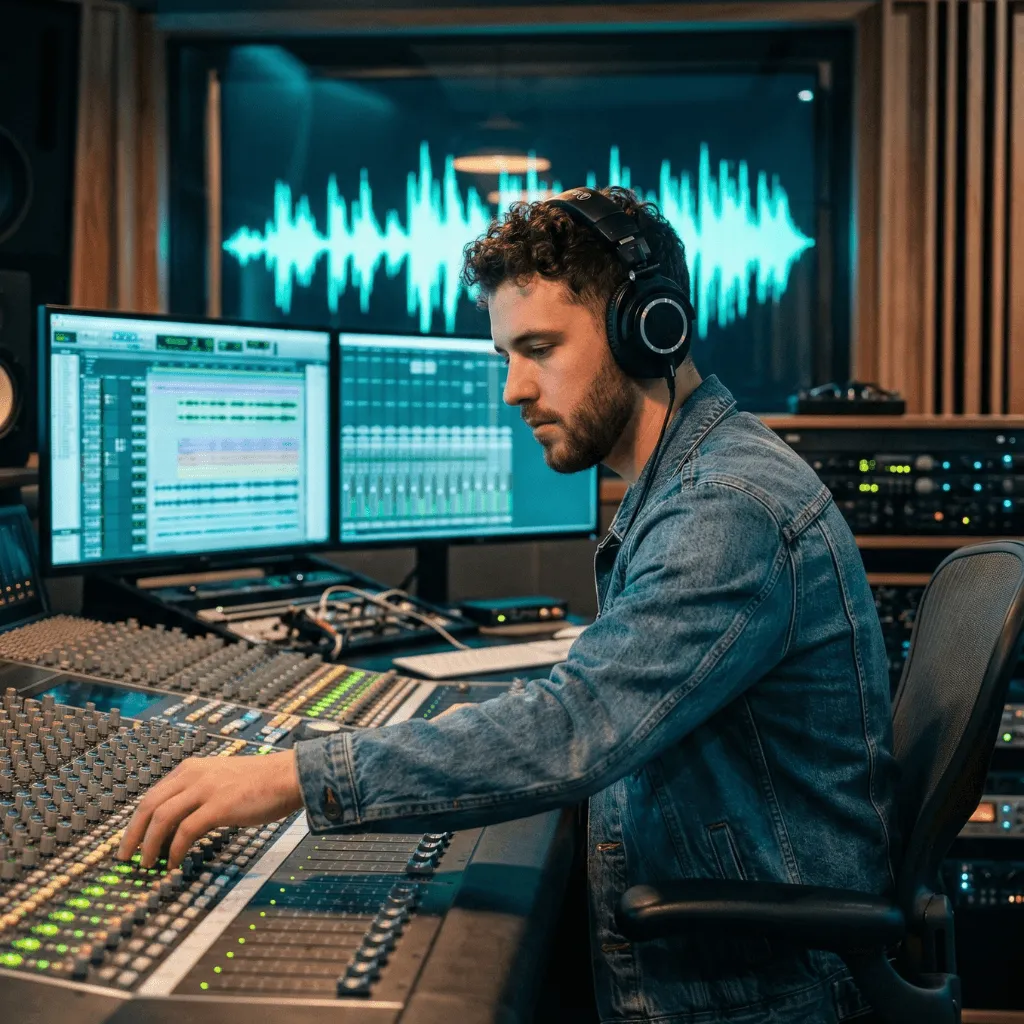
Music producer working at a computer with audio software

AI for songwriting: a guide for musicians who create, not delegate

One question hangs in the air of any conversation about music and technology: is artificial intelligence going to replace musicians?

The short answer is no. The long answer is that it depends on what kind of musician you are and how you view AI.

Right now, there are two distinct worlds in music AI. In one, AI generates complete tracks from a text prompt. You type "cheerful pop song about summer" and it spits out a track with melody, lyrics, arrangements, and vocals. In the other, AI is simply another tool on your workbench: it suggests a chord when you get stuck, helps you explore lyric directions, or proposes a structure when you don't know how to close a song. In the first world, AI composes. In the second, you compose with the help of AI.

This guide is about the second world. It's about using AI for songwriting as a musician who wants to create better, not delegate the process. If you want a list of generators to write songs for you, there are hundreds of articles for that. If you want to understand how AI can elevate your creative process without taking the wheel, keep reading.

The two worlds of music AI

Before diving into specific tools, you need to understand the fundamental difference between the two ways to use AI in music. They aren't the same, they don't serve the same purpose, and confusing them is the most common mistake musicians make.

Generative AI: the machine that composes

Generative AI tools like Suno, Udio, or Boomy create full songs from text prompts. Tell them what you want (genre, mood, tempo, theme) and they deliver a finished track. Some even generate vocals singing lyrics they wrote themselves.

Are they useful? Yes, in certain contexts. For background music in videos, ads, podcasts, or video games, they are powerful, cost-effective timesavers. But for a musician creating original music with an artistic voice, it's different. What they produce isn't your song. It is a statistically probable track based on patterns from millions of existing songs. It lacks your experience, your emotion, and your perspective. It only has data.

This isn't a criticism of the technology. It's an important distinction. If you need a background track for a corporate video, Suno is great. If you need to write the song you've been trying to finish for months, Suno won't help you.

AI assistant: the companion tool for songwriting

The alternative approach is radically different. Here, the AI doesn't compose. You do. The AI is there to assist when you need a push: when you can't find the next chord, when the second verse lyrics won't flow, when you are not sure if the structure works, or when you've been staring at the wall for an hour.

The difference lies in control. With generative AI, you define the input and the machine generates the output. With assistant AI, you generate the content and the machine provides options, suggestions, and perspectives that you can adapt, modify, or ignore. The creative choice is always yours.

Think of an AI assistant as a bandmate who never gets tired, has no ego, and always has an idea when you run dry. But the song remains entirely yours.

5 ways AI can help you write songs (without writing them for you)

Let's get practical. Here are five scenarios where using AI as an assistant tool adds the most value to a songwriter.

1. Overcoming writer's block

Writer's block is real. It happens to everyone. And AI can be an outstanding tool to break through it. Not by giving you "the answer," but by offering options that break the cycle of "I can't think of anything."

When you've spent thirty minutes trying to find the next chord in a progression and everything sounds flat, asking an AI for three alternatives can quickly unblock your flow. You don't have to use any of them. Sometimes, seeing what you don't want helps you find what you do.

Practical example: You have the verse and chorus, but the bridge is stuck. Tell the AI "suggest a transition between this chorus in G major and a bridge with contrasting emotional depth." The AI offers three options. None are perfect, but the second one sparks an angle you didn't consider. You tweak it. You make it yours. Problem solved.

2. Exploring chord progressions

Music theory is vast. No one knows every harmonic possibility. Sometimes, songwriters get trapped in the progressions they already know, the ones their hands play by muscle memory.

AI can show you paths you wouldn't explore on your own. It can suggest harmonic substitutions, unexpected modulations, or progressions from genres you don't usually listen to. It's like having an infinite chord dictionary that understands the context of your song.

Practical example: You usually write in minor keys and your progressions tend to sound similar. Ask the AI to suggest progressions that keep the melancholy mood but use different harmonic colors. It suggests a major seventh chord where you would normally play a minor. You try it. It sounds different, fresh, and uniquely yours.

3. Developing lyrics

Writing lyrics is one of the hardest parts of songwriting. AI won’t write your lyrics for you, but it is an incredible tool for finding options, synonyms, rhymes, or a different angle on what you are trying to say.

The trick is never to ask the AI to write the lyrics for you, but to ask it for raw material. "Give me 10 different ways to express missing someone without using the word 'miss'." From those 10 options, you find one that connects with your voice and craft it into something personal.

Practical example: You have a strong chorus, but the first verse feels too literal. Ask the AI to suggest imagery to convey the same emotion visually. Instead of "I feel alone in this city," the AI suggests "two cups on the shelf, one always clean." You choose, edit, and rewrite it. The final lyric is entirely yours. The spark came from the tool.

4. Proposing structures

Verse-chorus-verse-chorus-bridge-chorus? Or intro-verse-pre-chorus-chorus-verse-chorus-outro? Does the bridge go after the second chorus or before? Does this song even need a pre-chorus?

Structural decisions seem small, but they change the entire flow of a song. AI can analyze what you have and suggest structures that fit your material. It might tell you "your chorus is so strong you might not need a pre-chorus, go straight in" or "this verse is long, consider spliting it into two sections."

Practical example: You have three sections written (verse, chorus, and a fragment you don't know where to place). Ask the AI how to organize them. It suggests using the fragment as an outro to create an unexpected change in energy after the chorus. You hadn't thought of it. You try it, and it works.

5. Generating variations and alternatives

Sometimes the song is almost ready, but one detail feels off. A bar that feels repetitive, a melody that needs a twist, or a section that needs something different on the second repeat.

Asking an AI to generate variations of what you already have is a fast way to explore options without starting from scratch. You can ask "give me three variations of this verse rhythm" or "suggest an alternative melody for the second chorus entry."

Practical example: Your song has two identical verses and you feel the second one loses momentum. Ask the AI to suggest a subtle variation: perhaps a higher note on the third phrase, or a rhythmic shift that adds urgency. Small adjustments keep the design interesting while avoiding monotony.

What AI cannot do (and what sets you apart)

It is equally important to know where the limits are. If you don't, you risk delegating decisions you should be making yourself.

AI has no lived experiences. It has never been through a breakup, felt the butterflies of a first gig, or known the feeling of seeing a room connect with a song you wrote. Everything it "knows" comes from statistical patterns. It can mimic the shape of an emotion, but it can't feel it. And listeners can tell.

AI has no artistic voice. It has no real preferences or style developed over years of listening, playing, and composing. It can copy any style, which means it actually has none. Your artistic voice is exactly what the AI cannot replicate, and it is what makes your music yours.

AI doesn't know if a song is good. It can tell you if it is "probable" (based on what worked before), but it cannot judge if a song connects, has soul, or says something that needs to be said. That judgment is entirely human.

AI doesn't understand your context. It doesn't know that the minor chord in the bridge is a tribute to your grandfather who played jazz. It doesn't know the chorus repetition is intentional to build obsession. It doesn't know why you chose one specific word over another. You do.

AI is an extraordinary tool when used to amplify your creativity. It becomes a liability when used to replace it.

AI tools for songwriters: categorized map

Not all music AI tools do the same thing. Here is a map to help you navigate them based on your needs.

Full song generators

These tools create music from scratch using a prompt. They are not songwriting tools for musicians; they are music content generators.

Suno and Udio are the most popular. They generate songs with vocals, instruments, and polished production. AIVA specializes in instrumental tracks and soundtracks. Boomy lets you generate tracks and push them directly to streaming platforms. Soundraw offers deep customization for genres, moods, and instrumentation.

Best for: content creators, advertising, background tracks, fast prototyping. Not ideal for: musicians who want to write and craft their own songs.

Songwriting assistants

Tools that assist you during the creative process without writing the song for you. This is where Zoundroom lives: its AI assistant suggests chords, helps write lyrics, and proposes structures, all within the context of your musical project. It won't churn out a generic track. It feeds you ideas so you can keep creating.

Other songwriting assistants include ChatGPT (for lyric brainstorming and concepts), LyricStudio (lyric suggestions line-by-line), and Hookpad (for analyzing music theory and progressions).

Best for: songwriters, artists, and bands in their creative process.

AI production tools

These focus on production and post-production rather than songwriting, but they are incredibly useful. LANDR offers automatic AI mastering. Moises extracts stems (vocals, drums, bass, etc.) from any track, which is perfect for studying songs or crafting remixes. iZotope features AI-assisted mixing plugins.

Best for: producers, engineers, and musicians recording in their home studios.

Summary table by tool type

Category

What it does

Examples

Best for

Generators

Create full songs from a prompt

Suno, Udio, AIVA, Boomy, Soundraw

Content creators, advertisers

Songwriting assistants

Assist you while you compose

Zoundroom, ChatGPT, LyricStudio, Hookpad

Songwriters, artists, bands

AI Production

Mixing, mastering, stem separation

LANDR, Moises, iZotope

Producers, audio engineers

AI Lyrics

Generate or suggest lyric ideas

LyricStudio, ChatGPT, Songwriter's Pad

Lyricists, rappers, songwriters

How Zoundroom views AI: a tool, not a replacement

At Zoundroom, the AI isn't the main character. You are. The AI is a supportive tool in your workspace, sitting right alongside your recorder, lyric editor, and project organization tracker. It’s there when you need a spark, and fades out when you don’t.

This philosophy isn't accidental. It stems from a core belief: impactful music is made by humans. Technology can smooth out the wrinkles, speed up the process, and open unexpected doors. But deciding to step through those doors is always up to the musician.

How the AI assistant works in Zoundroom

The AI assistant lives right inside your projects. No separate windows, no switching apps. It sits next to your recordings, lyrics, and chords, ready to assist without taking over.

When you get stuck on chords, ask for progression suggestions that fit your existing workflow. It won't generate a song for you; it gives you options so you stay in control of the final decision.

When lyrics aren't flowing, brainstorm directions with the assistant. It serves up ideas, images, and alternatives. You pick what fits your identity and make it yours.

When you need structural ideas, just ask. It suggests ways to organize your material. You decide if the bridge works there or not.

The assistant never makes decisions for you. It won't declare, "your song must sound like this." It says, "here are three directions, which one speaks to you?"

An AI bandmate, not a ghost writer

We love this analogy: the Zoundroom AI assistant operates like a reliable bandmate. Someone who listens to your ideas, weighs in with feedback, and suggests options. But the track remains yours. It is not someone handing you a finished song and asking you to sign credit.

This difference is vital. At a time when musicians worry that AI will take their jobs, we believe that AI used correctly does the exact opposite: it gives you superpowers to do what you already do, but faster and better.

It's not AI vs. musicians. It's musicians armed with AI.

Songwriting & AI FAQs

If I use AI to write a song, is it still mine?

Yes, as long as you use AI as an assistant and not a full generator. If the AI suggests a chord and you use or tweak it in your arrangement, it's no different than a friend suggesting a chord during a jam session. The authorship is entirely yours. Intellectual property gets complicated with full generative AI, but that is a different story.

Can I use AI and still be an "authentic" musician?

Absolutely. Using a guitar tuner doesn't make you less of a musician. Neither does using a metronome or a DAW packed with plugins. Using assistant AI is no different. Authenticity lies in your artistic voice, your choices, and what you want to say. Not in the tools you use to express it.

Will AI completely replace songwriters?

It will replace creators of generic background tracks and stock content. It won't replace songwriters who write tracks that move people. The ability to connect human experience with musical expression is something AI simply cannot replicate. It can copy the form, but not the substance.

What if I rely too much on AI and lose my creative edge?

That is a real risk if you use AI as a crutch instead of a tool. The key is using it to explore, not to bypass work. If you ask the AI for the answers every time you run dry, you're delegating. If you use it to see options and then decide for yourself, you're songwriting with assistance. The distinction is subtle but critical.

Your music. Your process. Your call.

AI for songwriting is neither good nor bad. It's a tool—like a guitar, a microphone, or a notebook. What matters is how you use it and why.

If you use it to generate generic tracks you will never play, that mean nothing to you, and sound like everything else, the AI isn't helping you. It's taking away the rewarding work you should want to do.

But if you use it to unblock your system, explore new ground you wouldn't find alone, and make better creative decisions, then it becomes exactly what it should be: a tool at the service of the artist.

At Zoundroom, we stand by that second vision. We believe AI is just another tool in your creative setup. Nothing more, nothing less. That's why we've built it right into your workspace, alongside your recorder and lyrics, rather than as a separate app that replaces your own performance. A custom AI assistant built for your workflow.

Your music deserves your process. And your process deserves the best tools.

Download Zoundroom for free and see how our AI tools can elevate your songwriting while keeping you in the driver's seat.