2026 Music Band Apps: Write, Record, and Stay Organized
The apps your band needs to organize songs, share feedback, and record demos in 2026—without relying solely on Drive or WhatsApp. Discover how Zoundroom streamlines your workflow.
Eliseu Bellés · Founder of Zoundroom. Musician and entrepreneur from Valencia. I am building Zoundroom so musicians stop losing their best ideas.
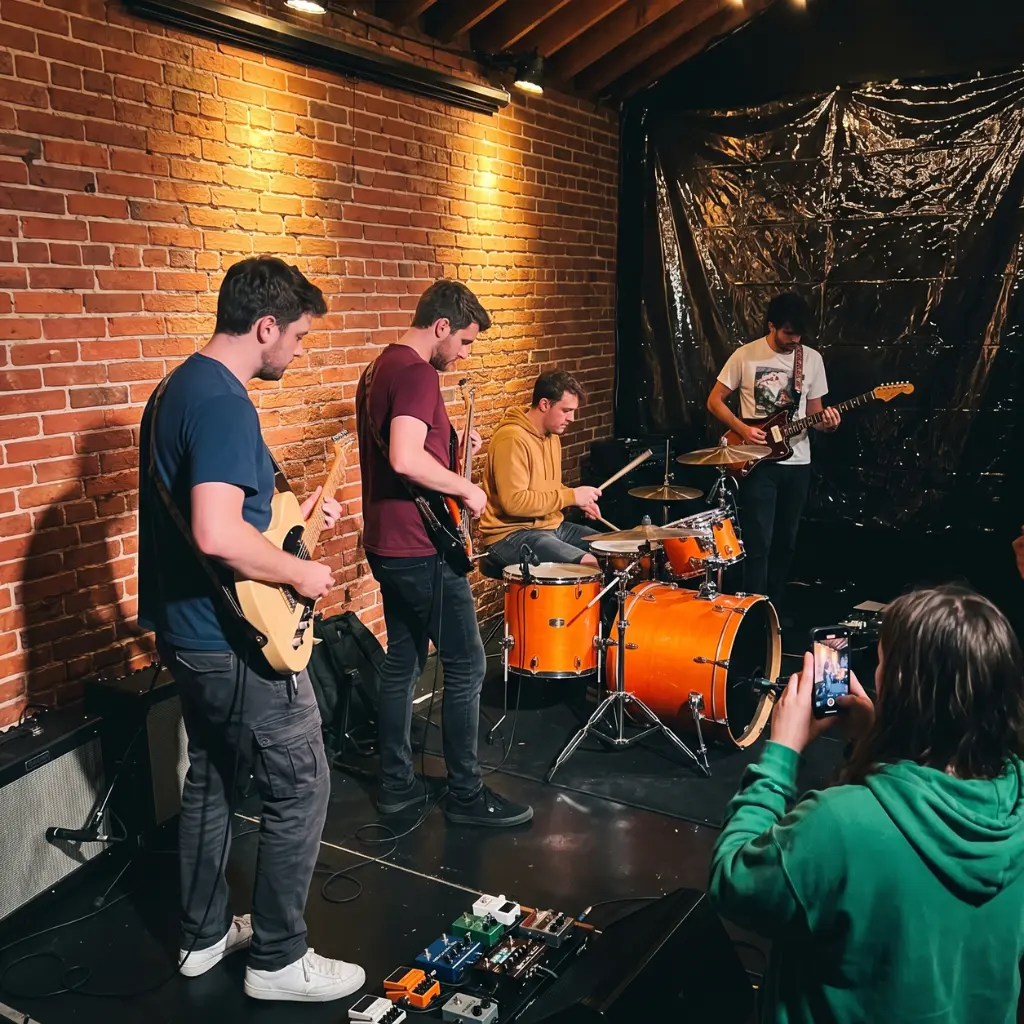
The Best Apps for Bands in 2026: Organize, Write, and Collaborate Without the Chaos
The bassist sends the new demo to the WhatsApp group. The guitarist listens to it three days later. The drummer says something is off in the bridge but can't remember the exact minute. The singer has a different version saved on her phone and isn't sure if it's the same one. By Thursday's rehearsal, nobody is clear on which version is the right one.
This isn't a commitment issue. It's a tool issue.
Playing in a band adds a layer of complexity that solo artists don't face. Songs don't belong to just one person. Feedback needs to reach everyone. Creative decisions are made collectively. If your system for managing all of this is a WhatsApp group and a Drive folder with unnamed files, chaos is inevitable.
This post organizes the best apps for bands in 2026 by the problems they solve, not by generic categories. Because a four-piece indie rock band writing its own songs has very different needs compared to a solo DJ or producer.
The Real Problem of Managing Songs as a Group
WhatsApp solves instant communication. Drive solves file storage. But neither is designed to manage the creative process of a song being built by four people at the same time.
The problem with WhatsApp is that context gets lost. Feedback on a song gets mixed in with discussions about rehearsal spaces, memes, and photos from Saturday’s gig. Three weeks later, finding that specific comment about the new song's bridge is impossible.
The problem with Drive is that files lack context. "demo_v3_final_good.mp3" tells you nothing about the song's status, what still needs work, or what you decided in the last rehearsal. When four people are uploading versions, the folder quickly becomes an unorganized mess.
Bands don't need generic communication or generic storage. They need a space where songs have structure: audio, lyrics, chords, notes, and feedback all in one place.
For Organizing and Developing Songs Together
This is the most critical need, yet it's the least addressed by generic tools.
Zoundroom with the Band plan is the most complete option for bands writing their own music. Each song is a shared project containing audio recordings, lyrics, chords, and working notes. All members see the same project in real time. No parallel versions, no lost context.
The role system ensures every member has the right level of access. The coordinator (the member centralizing everything and keeping the band organized) acts as the owner, managing who can edit and who can only listen and comment. This is perfect when one band member is more organized than the rest and naturally becomes the hub of operations.
The Band plan includes up to 7 members under a single shared subscription. No need for every member to pay separately; one plan covers the entire band.
BandLab is the go-to free alternative with collaborative features. It lets multiple musicians record over the same project from different devices and features an online community to share music publicly. It is geared more toward co-production than organizing the creative workflow—lacking the song project structure with lyrics, notes, and development stages found in Zoundroom. But if your band needs a free tool to start collaborating online, BandLab delivers.
The difference between WhatsApp and a dedicated music collaboration tool isn't convenience. It's context. Creative decisions need to live where the music lives, not where the memes do.
For Giving and Receiving Audio Feedback
Group feedback on music has a specific flaw: it's hard to be precise. "The bridge isn't working" tells the songwriter nothing. "At 1:23, when the guitar comes in, the chord sounds too bright for what we are going for" does.
Zoundroom lets you leave comments linked to the exact timestamp of the audio. Any band member can pin a specific point in the recording and write their note there. The songwriter knows exactly which moment the drummer is talking about without guessing.
Highnote is the most specialized tool on the market for professional audio feedback. It offers timestamped comments, version comparison, and granular permissions to control who can listen and comment. It's designed for professional workflows involving producers and clients, but bands working with an outside producer or looking for a higher level of detail in reviews can benefit from it.
For bands in the writing and development stage, Zoundroom's timestamped comments are more than enough and are built into the same space where the song lives. Highnote makes more sense when feedback involves external parties, like a producer or mix engineer.
What doesn't work is sending an audio file on WhatsApp accompanied by a voice note. Context gets lost, there is no organized history, and the songwriter has to listen to four different voice notes to piece the feedback together.
For Recording Band Demos
Recording a multi-instrument demo from home is trickier than recording solo, but you don't need a professional studio. It depends on your band's instrumentation and the type of demo you need.
For a scratch demo used to develop a song before rehearsal, you don't need to record every instrument. A vocal and acoustic guitar, or piano and vocal, are enough to get the direction across. A phone or a basic interface with a mic will do the trick.
For a promo demo featuring all instruments, the most common workflow for bands without a studio is recording in the rehearsal space using a couple of room mics or a portable recorder. It won't be studio quality, but it captures the raw energy of the band playing together.
BandLab allows collaborative overdubbing: the guitarist records a part and uploads it to the shared project, then the bassist listens and records their line over it from home. This is the most efficient workflow when the band can't meet physically to record.
GarageBand (free on iOS and Mac) is the standard for recording decent-quality demos at home. If the primary songwriter has an iPhone or Mac, they can lay down the scratch demo and share it with the band via Zoundroom so everyone can listen and comment in context.
For Coordinating Rehearsals and Logistics
Creative organization tools don't solve band logistics: when the next rehearsal is, who booked the room, or what setlist you are playing at next month's gig.
Bandhelper is the most comprehensive app for band management, covering rehearsal and gig scheduling, setlists, live lyric/chord viewing, and tracking shared expenses and payouts. It is built exactly for this and is available on iOS and Android. The free plan is highly functional for small groups.
A shared Google Calendar remains the simplest way to coordinate dates if your band doesn't want to learn a new tool. Just create a band calendar so全員 has access on their phones. It lacks music-specific features, but for managing schedules, it gets the job done and everyone already has it installed.
Notion or Trello used as shared boards are highly useful for bands needing more structure: tracking repertoire in progress, to-do lists, production budgets, or venue contacts. They are generic project management tools but adapt easily to band coordination.
For Sharing Sonorous References
Before writing a new song, organized bands align on references. What production style, mood, or instrumentation are you aiming for? Without shared references, every member arrives at rehearsal with a different idea of where the song is headed.
Spotify with collaborative playlists is the most popular tool for this. The guitarist adds three reference tracks, the drummer adds two more, and before rehearsal, everyone has listened to the same material and has a common ground to discuss the sound.
To learn how to use collaborative playlists effectively in a band, this post on collaborative playlists for bands explains the process in detail.
Comparison Table: Which App to Use Based on Band Needs
Need | Primary App | Alternative |
|---|---|---|
Organize and develop songs | Zoundroom (Band plan) | BandLab |
Timestamped audio feedback | Zoundroom | Highnote |
Record collaborative demos | BandLab | GarageBand |
Coordinate rehearsals and gigs | Bandhelper | Google Calendar |
Manage live setlists | Bandhelper | Ultimate Guitar |
Share reference tracks | Spotify (Collaborative playlists) | YouTube Music |
Band communication | Zoundroom (Comments) | WhatsApp (Messaging only) |
Frequently Asked Questions
Do all band members need the same app? For collaboration tools like Zoundroom or BandLab, yes: everyone needs the app installed to access the shared space. On Zoundroom, the Band plan covers up to 7 members with a single subscription, so individual members don't need to pay separately. For logistical tools like Google Calendar, everyone needs to use it too, but practically everyone already has it.
What do we do with songs we already have on Drive and WhatsApp? You don't need to migrate everything at once. Start using the new tool only for songs currently in progress and leave the archive where it is. Over time, active songs will live in the new tool, and Drive will serve as your archive. Trying to move everything at once is why many bands never switch systems.
Is BandLab enough, or is Zoundroom worth paying for? BandLab is free and handles collaborative recording and joint production well. Zoundroom is the right choice if your band writes original songs and needs a space where tracks have a complete structure: audio, lyrics, chords, notes, and development stages. If you primarily record covers or produce instrumental music, BandLab may be all you need.
Do these apps work if band members live in different cities? Yes, and that is one of their biggest strengths. Zoundroom and BandLab are built for remote collaboration. A guitarist in London can listen to a demo recorded by the bassist in Manchester, leave a comment at the exact second, and add their part. It doesn't replace physically rehearsing, but it keeps the songwriting process moving without needing to be in the same room.
What app would you recommend for a band starting from scratch? Zoundroom to organize and write your songs, BandLab to record collaborative demos if you can't meet up, and Bandhelper to coordinate rehearsals and gigs once you start playing regularly. These three cover your core needs without the bloat.
An original band has too much at stake to manage its creative output with tools not built for the job. Songs get lost, context gets fragmented, and the energy that should go into writing is wasted on trying to find the latest version.
The Zoundroom Band Plan is designed exactly for this. One subscription for the whole band, a unified space where every song has its own project, and everyone works on the same page. Try it for free at zoundroom.com.